The Real Meaning of Pink Carnations (Most People Get It Wrong)
Discover the real meaning of pink carnations and why most people misunderstand their symbolism. Learn their history, cultural significance, emotional depth, and proper occasions for gifting in this comprehensive guide.
Introduction
Pink carnations are among the most widely gifted flowers in the world, yet their symbolism is consistently misunderstood. We often see them exchanged on Mother’s Day, used in weddings, or arranged in sympathy bouquets without a true understanding of what they represent. Their delicate appearance and gentle hue conceal layers of historical, cultural, and emotional meaning that go far beyond simple affection. To understand pink carnations properly, we must look at their origins, their evolving symbolism, and the nuanced messages carried by different shades of pink.
The Historical Roots of Pink Carnations
The story of pink carnations begins in antiquity. Carnations, scientifically known as Dianthus caryophyllus, were cultivated over two thousand years ago in the Mediterranean region. The name Dianthus itself translates to “flower of the gods,” a testament to the reverence early civilizations held for this bloom. Pink carnations, in particular, gained prominence due to their association with divine love and enduring beauty.
In early Christian tradition, pink carnations were believed to have first bloomed from the tears of the Virgin Mary as she wept for Jesus. This legend firmly rooted pink carnations as symbols of a mother’s undying love and compassion. Over centuries, this association became deeply ingrained in Western culture, shaping how we continue to interpret the flower today.
Why Pink Carnations Are Commonly Misinterpreted
Most people assume that pink carnations simply symbolize romantic love. While romance is part of their meaning, it is far from the full picture. This misunderstanding arises because pink is often broadly associated with affection, softness, and emotional warmth. However, pink carnations carry a more refined and layered message that differs from the passionate symbolism of red roses or the playful tone of tulips.
Pink carnations primarily represent gratitude, admiration, and unconditional love. They are not inherently romantic in a passionate sense; instead, they express appreciation that is deep, respectful, and enduring. This distinction is critical when choosing flowers for meaningful occasions.
The Core Symbolism of Pink Carnations
At their core, pink carnations convey emotions that are steady rather than overwhelming. They communicate feelings that grow stronger with time rather than burn intensely in the moment.
The most widely accepted meanings of pink carnations include:
- Gratitude and appreciation
- Maternal and nurturing love
- Gentle admiration
- Lasting affection
- Good fortune and remembrance
These meanings make pink carnations especially appropriate for expressing thanks, honoring caregivers, or celebrating long-term relationships built on trust and respect.
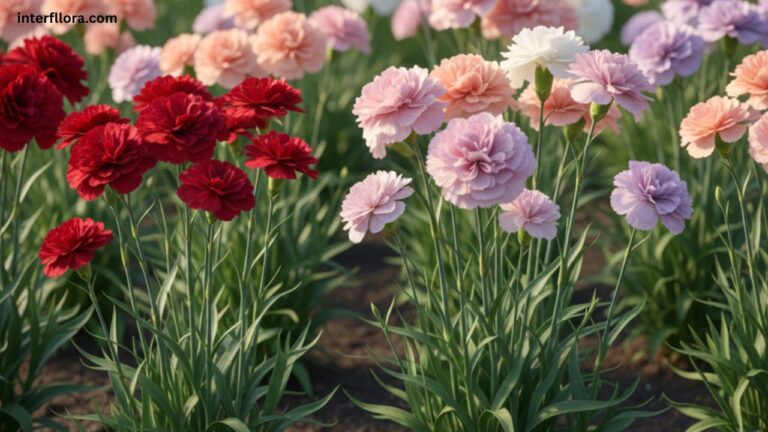
Understanding the Different Shades of Pink Carnations
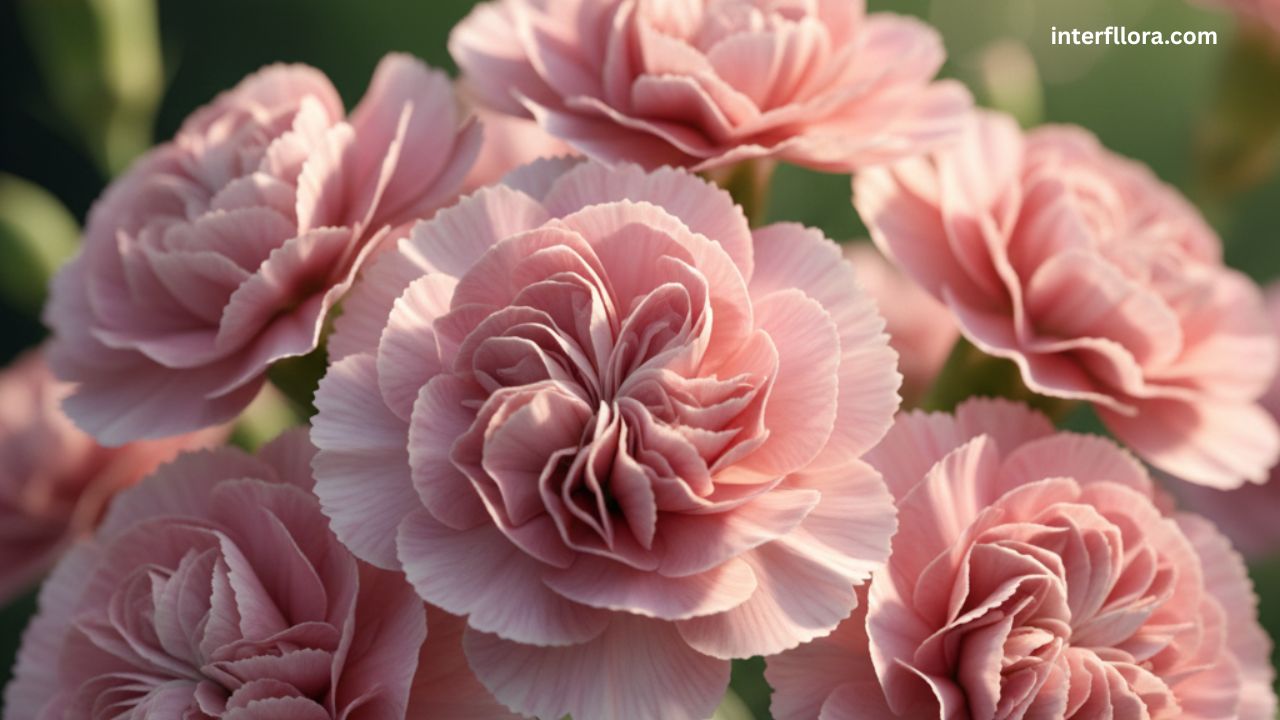
Not all pink carnations communicate the same message. The shade of pink plays a crucial role in interpreting their symbolism, and overlooking this detail is one of the most common mistakes people make.
Light Pink Carnations
Light pink carnations symbolize gentle admiration and sincere gratitude. They are often used to say “thank you” in a graceful and heartfelt way. These blooms are ideal for professional settings, appreciation gifts, and moments where understated elegance is preferred.
Medium Pink Carnations
Medium pink carnations express deep appreciation and affection. They strike a balance between emotional warmth and formality, making them suitable for close friends, mentors, and family members. This shade communicates care without romantic implication.
Dark Pink Carnations
Dark pink carnations carry a stronger emotional weight. They symbolize profound gratitude, recognition, and admiration. These flowers are often chosen to honor someone’s achievements or to convey heartfelt thanks during significant life moments.
Pink Carnations and Motherhood
Perhaps the strongest and most enduring association of pink carnations is with motherhood. This connection is not symbolic guesswork but a tradition rooted in history. When Mother’s Day was formally established in the early 20th century, pink carnations were chosen as the official flower to honor living mothers.
Pink carnations represent a mother’s unconditional love, patience, and selflessness. Unlike flowers that symbolize fleeting romance, pink carnations honor a bond that is constant and nurturing. This is why they remain a timeless choice for celebrating maternal figures across cultures.
The Role of Pink Carnations in Modern Floral Gifting
In contemporary floral arrangements, pink carnations are often underestimated due to their affordability and availability. However, their versatility makes them one of the most meaningful flowers when used intentionally.
Pink carnations are frequently used in:
- Appreciation bouquets
- Sympathy arrangements
- Wedding floral designs
- Corporate gifting
- Commemorative events
Their long-lasting nature also reinforces their symbolism of enduring affection. A pink carnation bouquet tends to remain fresh longer than many other flowers, subtly reinforcing the message of lasting appreciation.
Pink Carnations in Romantic Contexts
While pink carnations are not traditionally associated with passionate romance, they do have a place in romantic relationships. They are best suited for expressing steady, mature love rather than infatuation. In long-term partnerships, pink carnations communicate loyalty, respect, and emotional security.
They are particularly appropriate for anniversaries that celebrate years of shared growth rather than dramatic declarations of passion. In this context, pink carnations speak volumes without exaggeration.
Cultural Interpretations of Pink Carnations
Across different cultures, pink carnations maintain their core symbolism while taking on subtle regional meanings. In many European traditions, they are associated with remembrance and gentle mourning. In Asian cultures, pink carnations are often used to express respect and familial devotion.
Despite cultural variations, the central theme remains consistent: pink carnations communicate emotions that are sincere, enduring, and rooted in appreciation rather than intensity.
Pink Carnations in Sympathy and Remembrance
Another commonly misunderstood use of pink carnations is in sympathy arrangements. Some believe their gentle color is inappropriate for somber occasions. In reality, pink carnations are particularly meaningful in moments of loss.
They symbolize remembrance, gratitude for a life lived, and gentle consolation. Unlike stark or dramatic funeral flowers, pink carnations offer comfort and express sympathy without overwhelming grief. Their presence communicates quiet support and respect.
Why Pink Carnations Are Timeless
Trends in floral design come and go, yet pink carnations remain consistently relevant. Their symbolism does not rely on fleeting fashion but on universal human emotions. Gratitude, love, admiration, and remembrance are timeless sentiments, and pink carnations express them with remarkable clarity.
Their durability, affordability, and emotional depth make them accessible without diminishing their significance. This balance is rare in floral symbolism and contributes to their enduring appeal.
Choosing Pink Carnations with Intention
Understanding the true meaning of pink carnations allows us to use them thoughtfully rather than habitually. When chosen with intention, they become more than decorative elements; they become emotional messages.
See Also: What is carnations?
Pink carnations are best given when we want to say:
- “Thank you for everything you’ve done.”
- “Your presence in our lives matters.”
- “Your love and care are deeply appreciated.”
- “Your memory will always be cherished.”
The Deeper Truth About Pink Carnations
The real meaning of pink carnations is not hidden; it is simply overlooked. They are not flowers of dramatic passion or casual affection. They are flowers of enduring gratitude, nurturing love, and quiet admiration. When we understand this, we begin to see pink carnations not as ordinary blooms, but as powerful symbols of the relationships that shape our lives over time.
Pink Carnations in Art, Literature, and Symbolic Expression
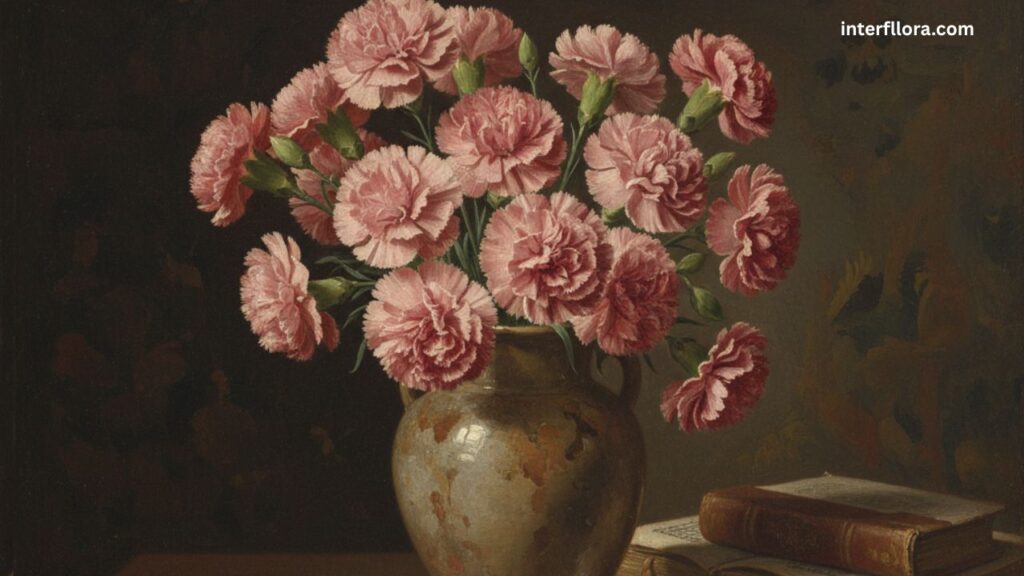
Throughout history, pink carnations have appeared repeatedly in art, poetry, and literature, often used as subtle symbols rather than dramatic focal points. Painters favored them for still-life compositions because their layered petals conveyed softness, realism, and emotional restraint. Unlike roses, which often dominate a scene, pink carnations add emotional context without overpowering the narrative.
In literature, pink carnations frequently symbolize quiet devotion, moral integrity, and emotional sincerity. Authors have used them to represent characters whose love is steady and selfless rather than impulsive. This reinforces the idea that pink carnations are not about spectacle, but about depth. When included in symbolic scenes, they often reflect relationships built on trust, sacrifice, and mutual respect.
The Psychological Impact of Pink Carnations
Color psychology plays a significant role in how pink carnations are perceived. The color pink is associated with calmness, reassurance, and emotional balance. When combined with the carnation’s naturally structured form, the result is a flower that evokes stability and comfort.
Pink carnations have been shown to:
- Promote feelings of safety and warmth
- Reduce emotional tension
- Encourage reflection and gratitude
- Create an atmosphere of gentle positivity
This makes them particularly effective in environments such as hospitals, memorial spaces, and family gatherings, where emotional reassurance is valued more than intensity.
Pink Carnations in Weddings and Ceremonial Events
In weddings, pink carnations are often overlooked in favor of roses or peonies. However, couples who choose them do so intentionally. Pink carnations symbolize lasting partnership, mutual admiration, and emotional commitment, making them especially meaningful for ceremonies that emphasize longevity over extravagance.
They are commonly used in:
- Bridal bouquets representing enduring love
- Centerpieces symbolizing gratitude toward guests
- Floral arches expressing unity and stability
Unlike trend-driven flowers, pink carnations offer symbolism that aligns with the foundational values of marriage: trust, patience, and shared growth.
Religious and Spiritual Significance of Pink Carnations
Beyond Christianity, pink carnations hold spiritual meaning in various belief systems. They are often associated with compassion, humility, and divine care. In spiritual contexts, pink carnations are used to express reverence without grandiosity, aligning with traditions that value modesty and inner strength.
In places of worship, pink carnations often appear during celebrations of life, remembrance services, and events honoring caregivers or spiritual leaders. Their symbolism reinforces themes of gratitude and quiet devotion rather than authority or dominance.
Pink Carnations Compared to Other Flowers
To fully understand the significance of pink carnations, it helps to compare them with other commonly gifted flowers:
| Flower | Primary Symbolism | Emotional Tone |
| Red Roses | Passion, desire | Intense, dramatic |
| White Lilies | Purity, mourning | Formal, solemn |
| Tulips | Cheerful love | Light, playful |
| Pink Carnations | Gratitude, admiration | Calm, enduring |
This comparison highlights why pink carnations are uniquely suited for moments that require emotional sincerity without excess.
Why Pink Carnations Are Ideal for Long-Term Relationships
In friendships, family bonds, and professional relationships, pink carnations convey appreciation without romantic confusion. They are ideal for expressing:
- Respect for longevity
- Recognition of emotional support
- Appreciation built over time
Their symbolism aligns perfectly with relationships that have matured and deepened rather than intensified quickly.
Modern Trends and the Renewed Appreciation of Pink Carnations
As consumers increasingly seek meaningful and sustainable choices, pink carnations are experiencing a quiet resurgence. Florists and designers are reintroducing them as intentional symbols rather than filler flowers. Their durability, affordability, and symbolism align well with modern values of mindfulness and authenticity.
Social trends emphasizing gratitude, emotional intelligence, and long-term connection have also contributed to renewed interest in pink carnations. They are increasingly featured in minimalist arrangements where every element carries purpose.
Common Myths About Pink Carnations
Despite their rich symbolism, several myths persist:
- Myth: Pink carnations are generic or outdated
Truth: Their meaning is timeless, not trendy - Myth: They are only suitable for Mother’s Day
Truth: They are appropriate for gratitude, remembrance, and admiration year-round - Myth: They lack emotional depth
Truth: Their symbolism is among the most emotionally nuanced of all flowers
Dispelling these myths allows us to appreciate pink carnations for what they truly represent.
How to Present Pink Carnations for Maximum Meaning
Presentation matters when gifting pink carnations. Pairing them with complementary flowers or simple greenery enhances their message without diluting their symbolism. Neutral wrapping, soft textures, and minimal embellishments allow the flowers’ meaning to remain the focus.
Including a handwritten note emphasizing gratitude or admiration further strengthens the emotional impact. Pink carnations speak quietly, but when supported thoughtfully, their message resonates deeply.
The Enduring Legacy of Pink Carnations
Pink carnations have endured centuries of cultural change without losing their symbolic integrity. They continue to represent gratitude that does not fade, love that does not demand, and admiration that does not seek attention. Their legacy lies not in spectacle, but in emotional truth.
In a world increasingly drawn to bold gestures, pink carnations remind us of the power of subtlety. They honor relationships built on patience, care, and shared history.
Final Thoughts on the True Meaning of Pink Carnations
The real meaning of pink carnations is often misunderstood because it does not shout. It whispers. These flowers symbolize enduring gratitude, nurturing love, and sincere admiration emotions that form the backbone of our most meaningful relationships. When chosen with understanding, pink carnations become more than a gift; they become a message of respect, appreciation, and emotional depth that words alone often fail to express.