How to Grow Standard Carnations at Home
Learn how to grow standard carnations at home with our complete, step-by-step guide. Discover soil preparation, planting, watering, pruning, pest control, and blooming tips to grow healthy, vibrant carnations year-round.
Introduction
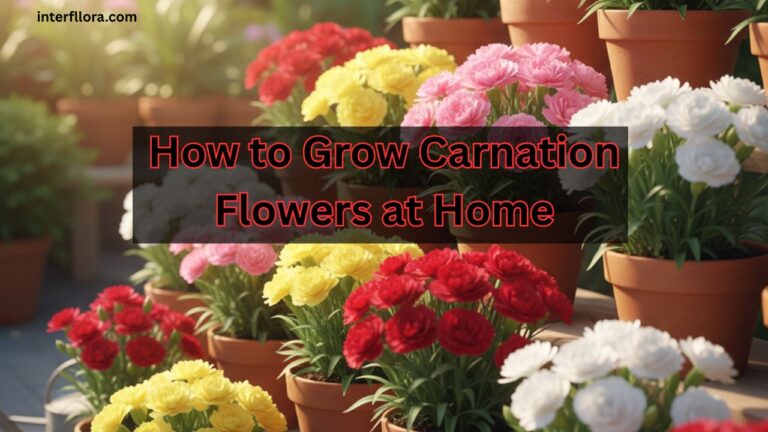
Growing standard carnations at home is a rewarding endeavor that combines elegance, fragrance, and long-lasting blooms. These classic flowers, prized for their ruffled petals and wide color range, adapt beautifully to home gardens, patios, and even indoor containers when cultivated correctly. By following a structured, detail-oriented approach, we can achieve professional-quality carnations that rival those grown commercially.
This comprehensive guide presents a complete, step-by-step framework for cultivating healthy, vibrant standard carnations at home, from soil preparation to post-bloom care.
Understanding Standard Carnations
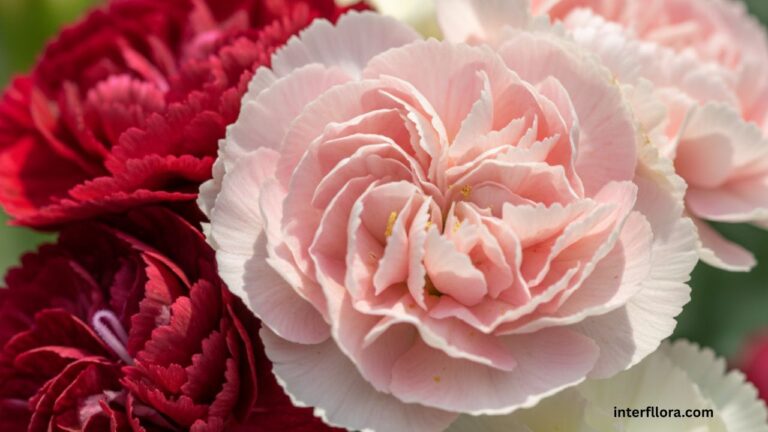
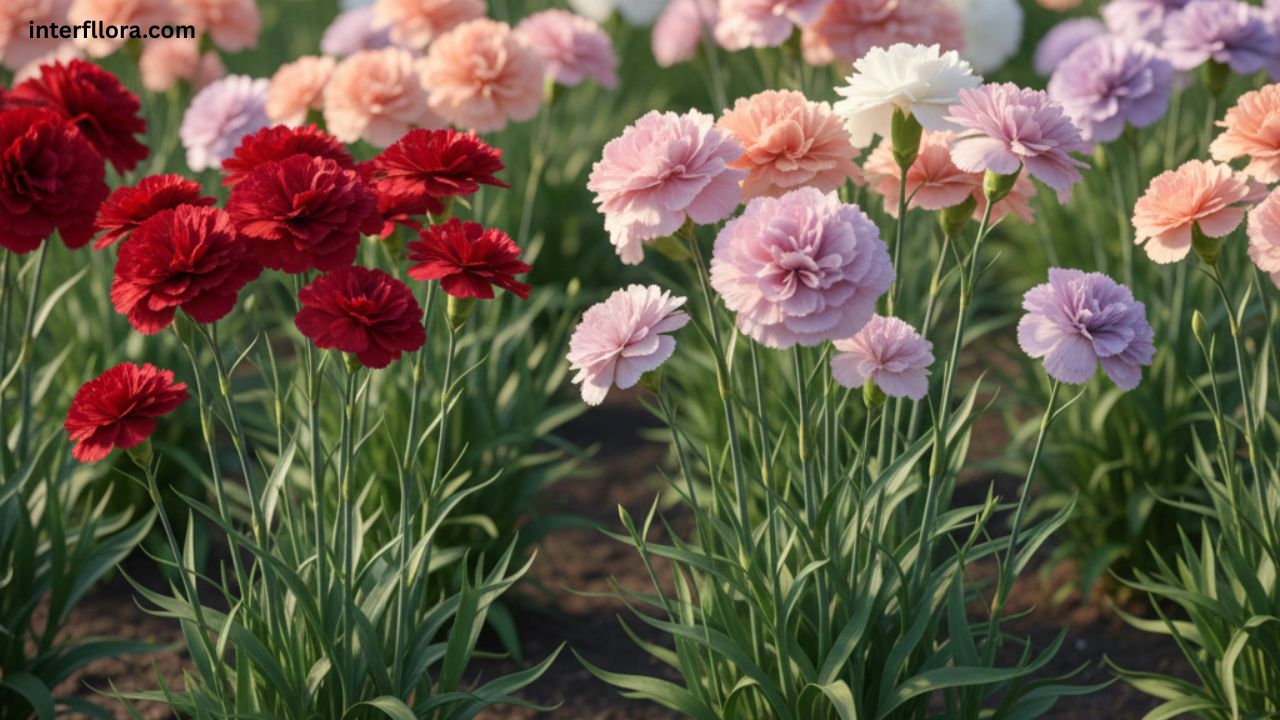
Standard carnations, botanically known as Dianthus caryophyllus, are distinguished by producing a single, large bloom per stem. Unlike spray carnations, which form clusters, standard varieties focus energy on one prominent flower, making them ideal for cutting and display.
These plants thrive in temperate climates and are valued for :
- Extended blooming periods
- Strong, straight stems
- Subtle, clove-like fragrance
- Excellent vase life
Standard carnations are perennials in mild climates and can be grown as annuals in cooler regions, offering flexibility for home gardeners.
Choosing the Right Carnation Variety
Selecting the appropriate variety is fundamental to success. Not all carnations perform equally in home conditions, so careful selection ensures stronger growth and better flowering.
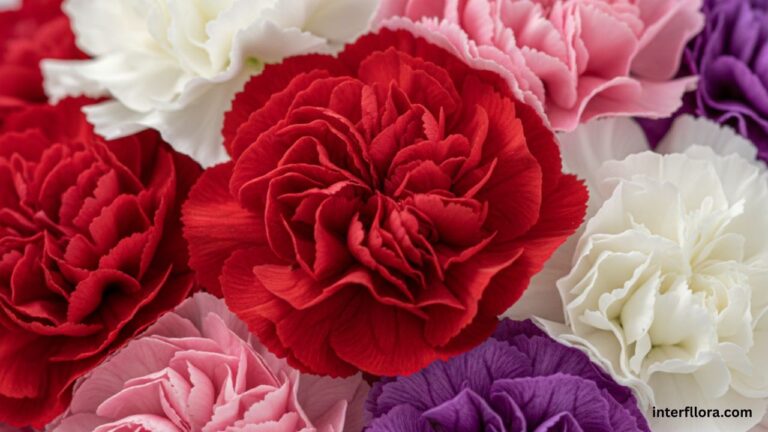
Popular standard carnation varieties include:
- White Sim—Classic white blooms with excellent stem strength
- Scania Red—Deep red flowers with high disease resistance
- Yellow Rony—Bright yellow petals with vigorous growth
- Purple Chabaud – Frilled petals with intense coloration
When selecting seeds or cuttings, we recommend sourcing from reputable nurseries to ensure genetic purity, disease resistance, and high germination rates.
Ideal Climate and Light Conditions
Standard carnations flourish in environments that balance sunlight, airflow, and moderate temperatures.
Optimal growing conditions include:
- Sunlight: 6–8 hours of direct sunlight daily
- Temperature: Daytime range of 55–70°F (13–21°C)
- Air circulation: Essential for preventing fungal diseases
In warmer regions, light afternoon shade protects plants from heat stress. In cooler climates, carnations benefit from full sun exposure throughout the day.
Preparing the Perfect Soil
Soil quality directly influences root development, nutrient absorption, and flower production. Carnations demand well-draining, fertile soil with a slightly alkaline pH.
Recommended soil characteristics:
- pH level: 6.5–7.5
- Texture: Loamy and crumbly
- Drainage: Excellent, never waterlogged
To prepare the soil, we incorporate:
- Aged compost or well-rotted manure
- Coarse sand for drainage improvement
- Garden lime to adjust pH if needed
Raised beds or containers with drainage holes are ideal for preventing root rot and ensuring consistent moisture control.
Planting Standard Carnations
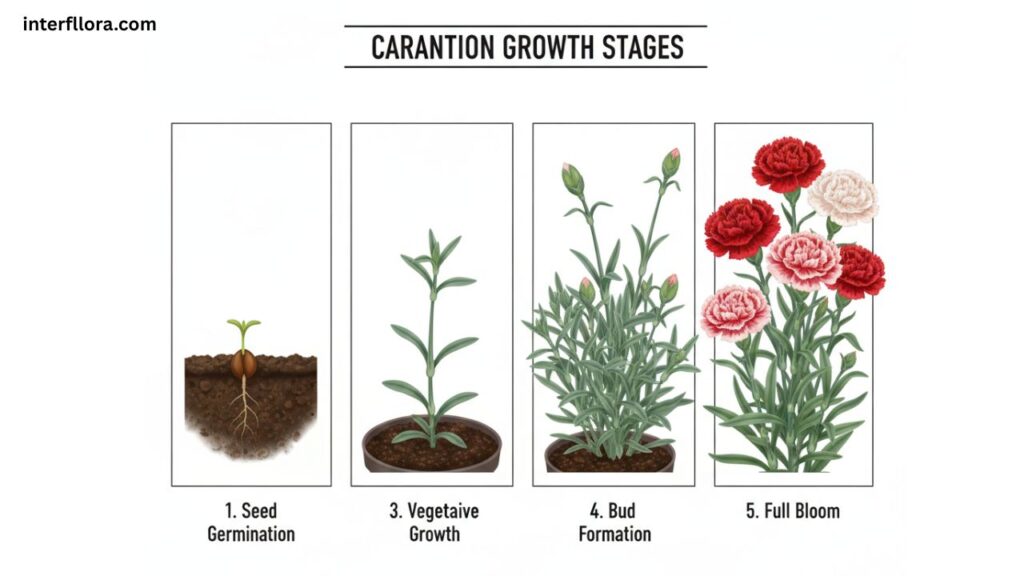
Carnations can be grown from seeds, cuttings, or young transplants. Each method has advantages, but cuttings and transplants offer faster flowering.
Planting Steps
- Space plants 10–12 inches apart to allow airflow
- Plant at the same depth as the original container
- Firm soil gently around roots
- Water thoroughly after planting
Planting is best done in early spring or autumn, depending on climate, allowing roots to establish before extreme temperatures arrive.
Watering Practices for Healthy Growth
Consistent watering is crucial, yet overwatering is a common mistake. Carnations prefer evenly moist soil without saturation.
Effective watering guidelines include:
- Water deeply 1–2 times per week
- Allow the top inch of soil to dry between waterings
- Avoid wetting foliage to prevent fungal issues
Drip irrigation or soaker hoses provide controlled moisture while maintaining dry leaves and stems.
Fertilization and Nutrient Management
To support continuous growth and abundant blooms, standard carnations require balanced nutrition.
We recommend:
- Base fertilizer: Balanced NPK (10-10-10 or 12-12-12)
- Frequency: Every 3–4 weeks during active growth
- Supplement: Calcium-rich fertilizers to strengthen stems
Excess nitrogen should be avoided, as it encourages leafy growth at the expense of flowers.
Pinching and Pruning Techniques
Proper pinching and pruning significantly improve flower size and stem quality.
Pinching
Pinching young plants encourages branching:
- Pinch after 5–6 leaf pairs develop
- Remove the central growing tip
This process results in stronger stems capable of supporting large blooms.
Pruning
Regular pruning removes:
- Dead or diseased stems
- Spent flowers
- Weak side shoots
This redirects energy into healthy growth and prolonged blooming.
Supporting Tall Carnation Stems
Standard carnations often require support to keep stems upright and unbroken.
Effective support methods include:
- Bamboo stakes
- Plant rings
- Soft garden ties
Stems should be loosely secured to avoid damage while maintaining natural movement and airflow.
Managing Pests and Diseases
Carnations are relatively hardy, but proactive care prevents common issues.
Common Pests
- Aphids
- Spider mites
- Thrips
Common Diseases
- Fusarium wilt
- Rust
- Powdery mildew
We manage these challenges by:
- Maintaining proper spacing
- Ensuring excellent drainage
- Using neem oil or insecticidal soap when necessary
Early detection and prompt treatment preserve plant health and bloom quality.
Encouraging Long-Lasting Blooms
To maximize flowering duration and bloom size, consistent maintenance is essential.
Key practices include:
- Deadheading faded flowers promptly
- Maintaining stable moisture levels
- Providing continuous nutrition
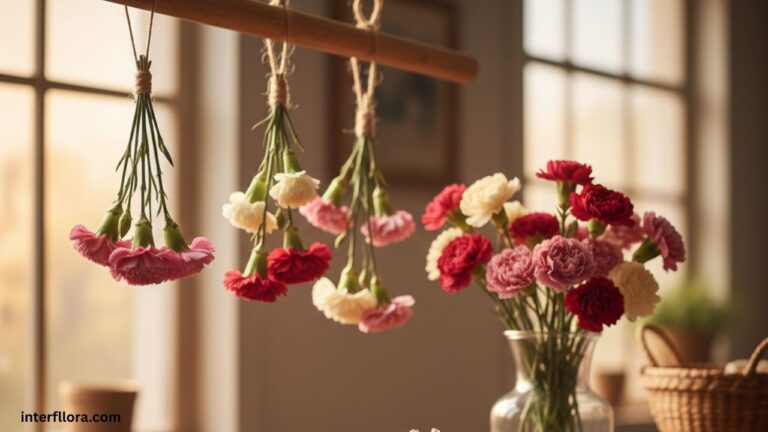
Healthy plants reward attention with blooms that last several weeks on the plant and up to two weeks in a vase.
Harvesting Carnations for Cutting
Harvesting at the correct stage ensures maximum vase life.
Best harvesting tips:
- Cut flowers early in the morning
- Select buds showing full color but not fully open
- Use clean, sharp tools
Immediately place stems in clean water to prevent air embolisms and extend freshness.
Overwintering and Seasonal Care
In mild climates, standard carnations survive winter outdoors with minimal protection. In colder regions, additional care is required.
We recommend:
- Applying mulch to protect roots
- Moving container plants indoors
- Reducing watering during dormancy
With proper winter care, carnations return stronger in the following growing season.
Conclusion
Growing standard carnations at home is an achievable and deeply satisfying process when approached with precision and care. By selecting the right varieties, preparing nutrient-rich soil, maintaining proper watering and feeding routines, and practicing diligent pruning and pest management, we can cultivate carnations that deliver elegance, fragrance, and exceptional longevity. These timeless flowers elevate home gardens and indoor spaces alike, offering beauty that endures season after season.