How to Grow Carnation Flowers at Home: 10 Simple Steps
Learn how to grow carnation flowers at home with 10 simple steps. Easy tips for beginners, healthy blooms, and low-maintenance gardening.
Carnation flowers are loved worldwide for their ruffled petals, pleasant fragrance, and long-lasting blooms. Whether grown in pots, containers, or garden beds, carnations are surprisingly easy to maintain, making them perfect for beginners and home gardeners.
In this guide, you will learn how to grow carnation flowers at home in 10 simple steps, using practical methods that ensure healthy plants and abundant blooms.
Benefits of Growing Carnation Flowers at Home
Growing carnations at home offers several advantages:
With proper care, carnations can bloom continuously for months.
Understanding Carnation Plants
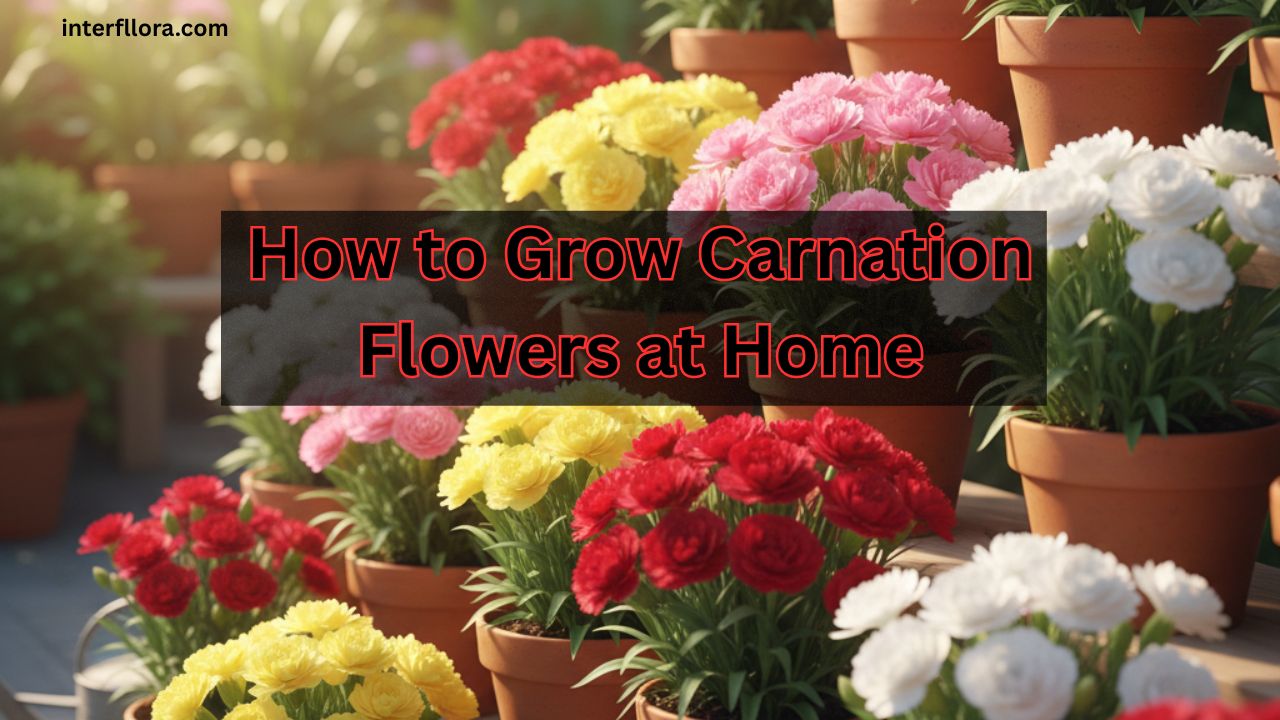
Carnations belong to the Dianthus genus and are available in annual, biennial, and perennial varieties. They thrive in cool to moderate climates and prefer plenty of sunlight with well-draining soil. Most garden carnations grow between 12 and 24 inches tall and produce flowers in shades of pink, red, white, yellow, and purple.
10 Simple Steps to Grow Carnation Flowers at Home
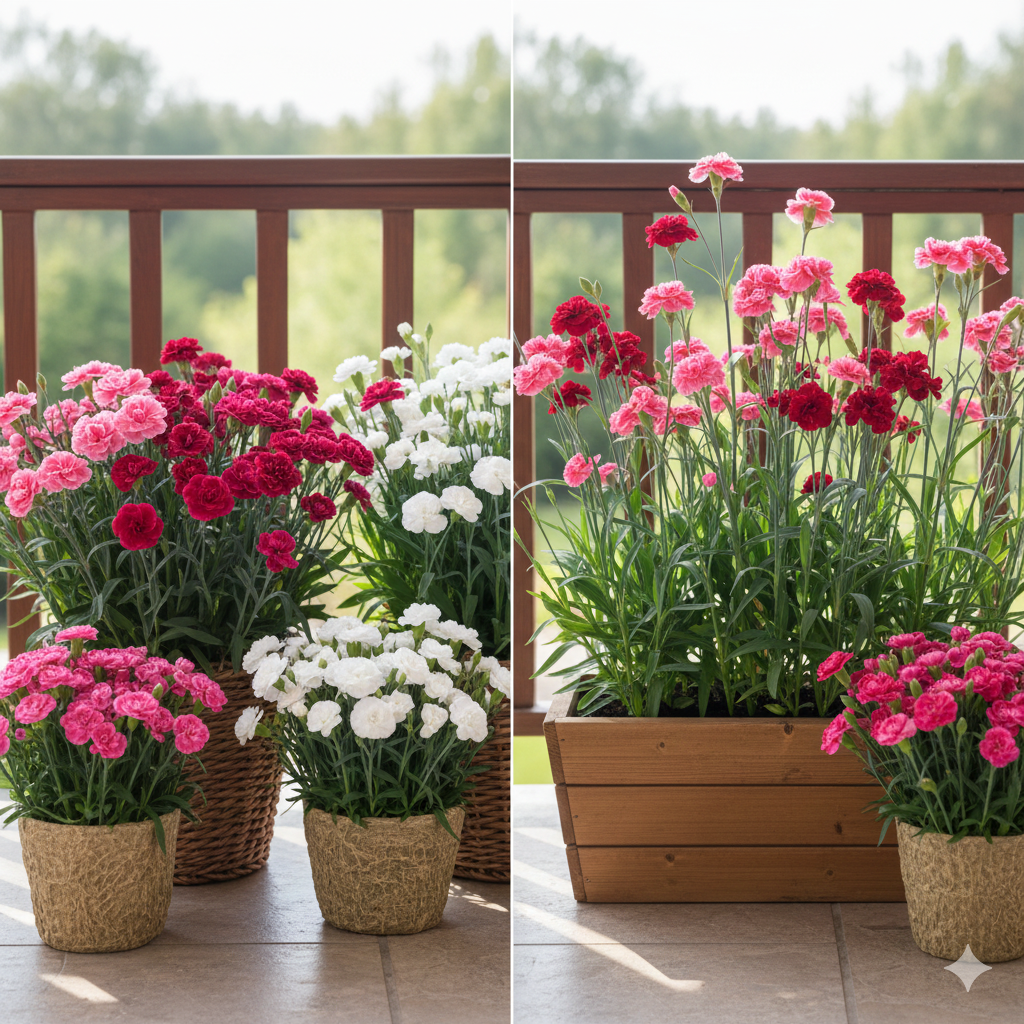
Step 1: Choose the Right Carnation Variety
Select a variety suitable for home gardening, such as dwarf or spray carnations. These types perform well in containers and small spaces. Always consider your local climate before purchasing seeds or plants.
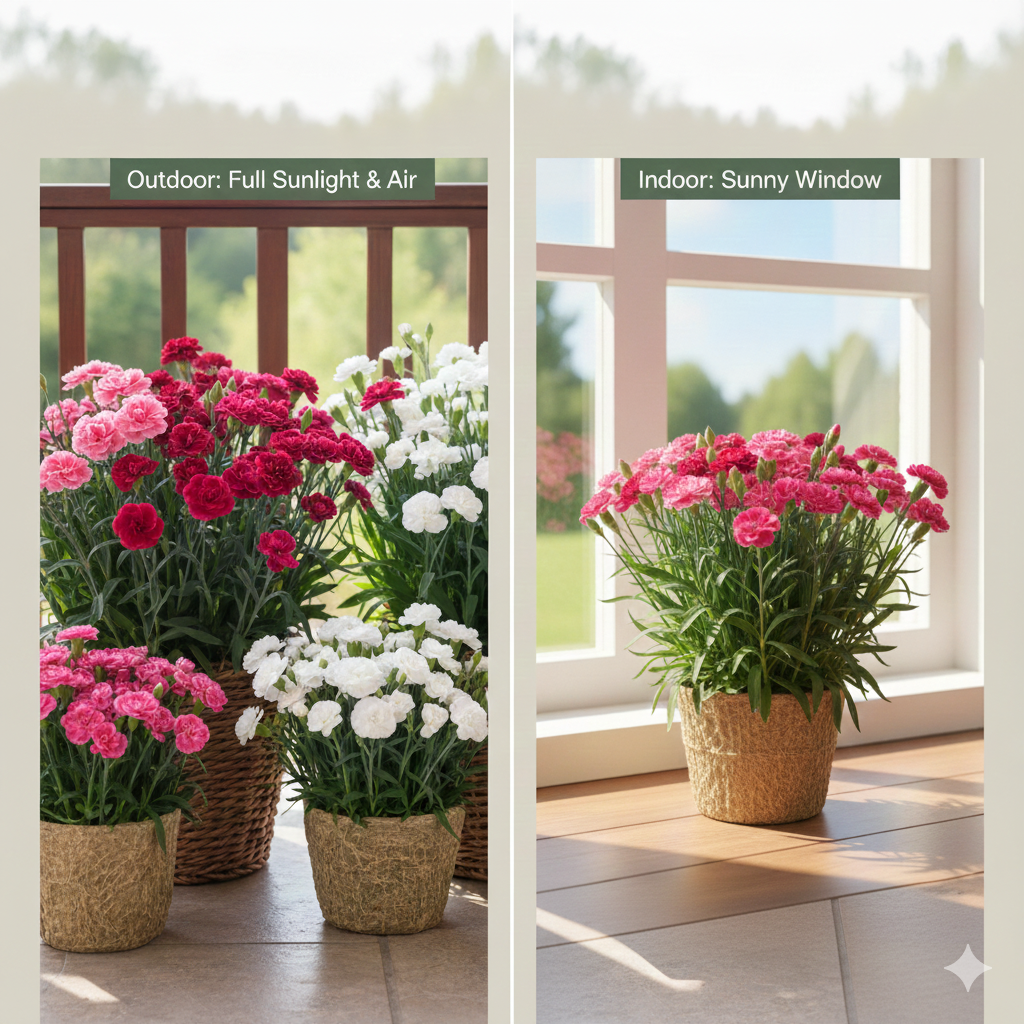
Step 2: Select the Ideal Location
Carnations grow best in full sunlight, requiring at least 5–6 hours of direct sun daily. Choose a spot with good air circulation. If growing indoors, place the pot near a sunny window.
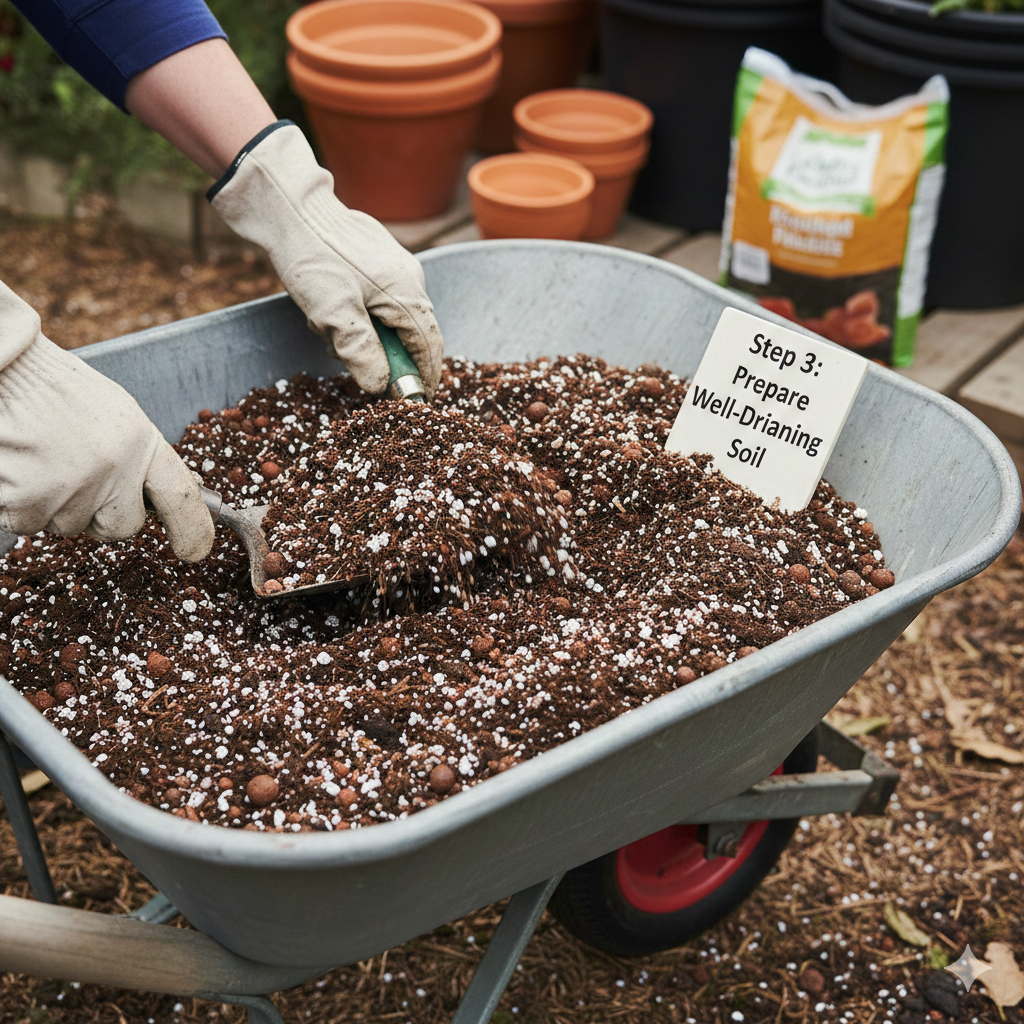
Step 3: Prepare Well-Draining Soil
Well-draining soil is essential for healthy carnation roots. Use loamy soil mixed with compost or organic matter. The ideal soil pH ranges between 6.5 and 7.5. Avoid heavy clay soil, as it retains too much water.
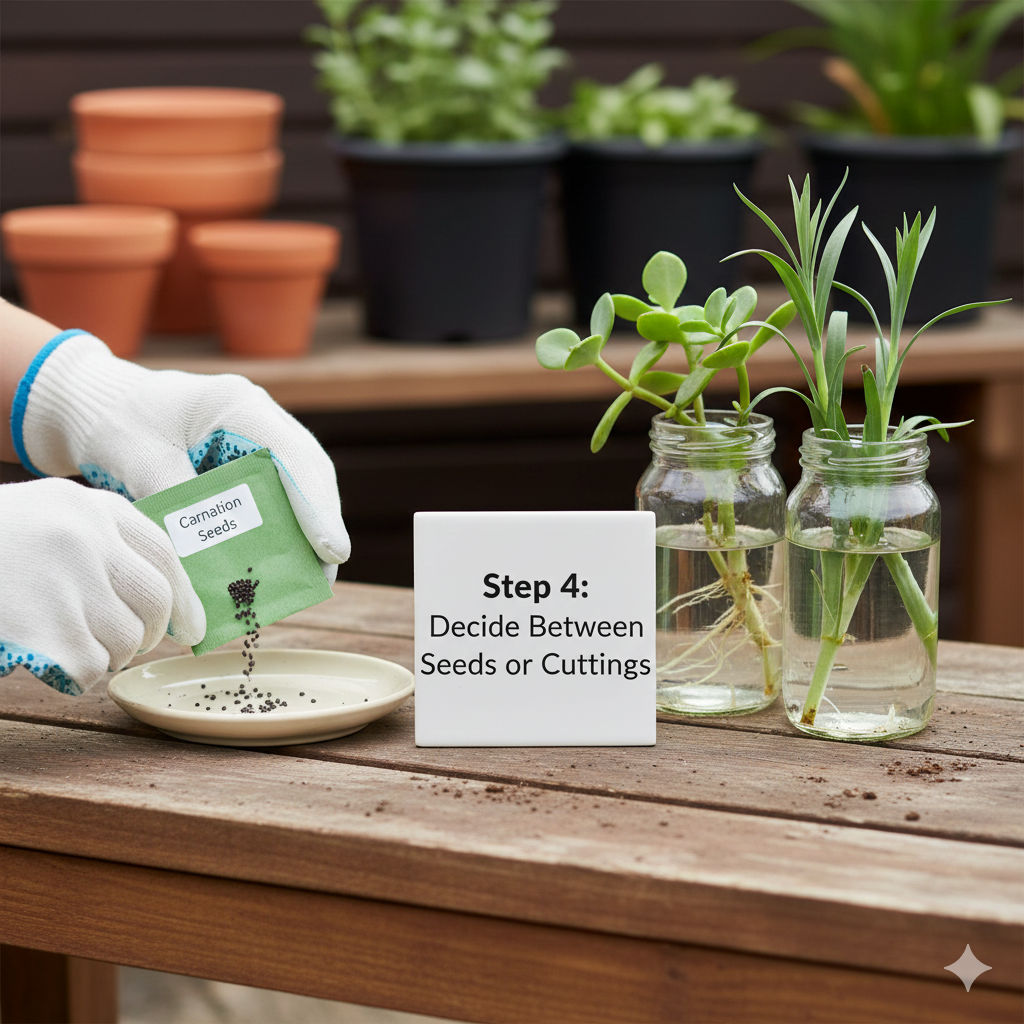
Step 4: Decide Between Seeds or Cuttings
You can grow carnations from seeds or stem cuttings:
- Seeds are affordable but take longer to bloom.
- Cuttings provide faster and more reliable results.
For beginners, cuttings are often the better option.
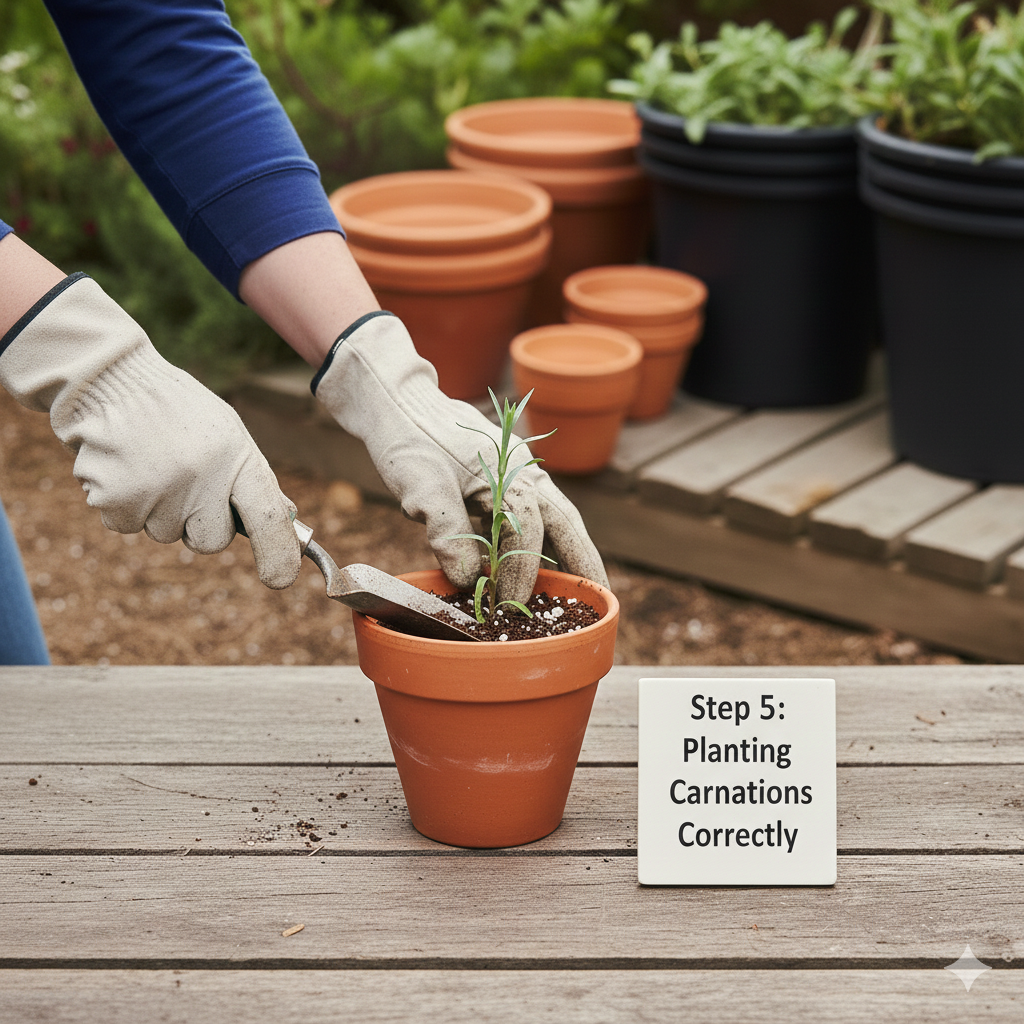
Step 5: Planting Carnations Correctly
Plant seeds shallowly or place cuttings carefully into moist soil. Maintain spacing of at least 8–10 inches between plants to allow airflow. Choose pots with drainage holes to prevent root rot.
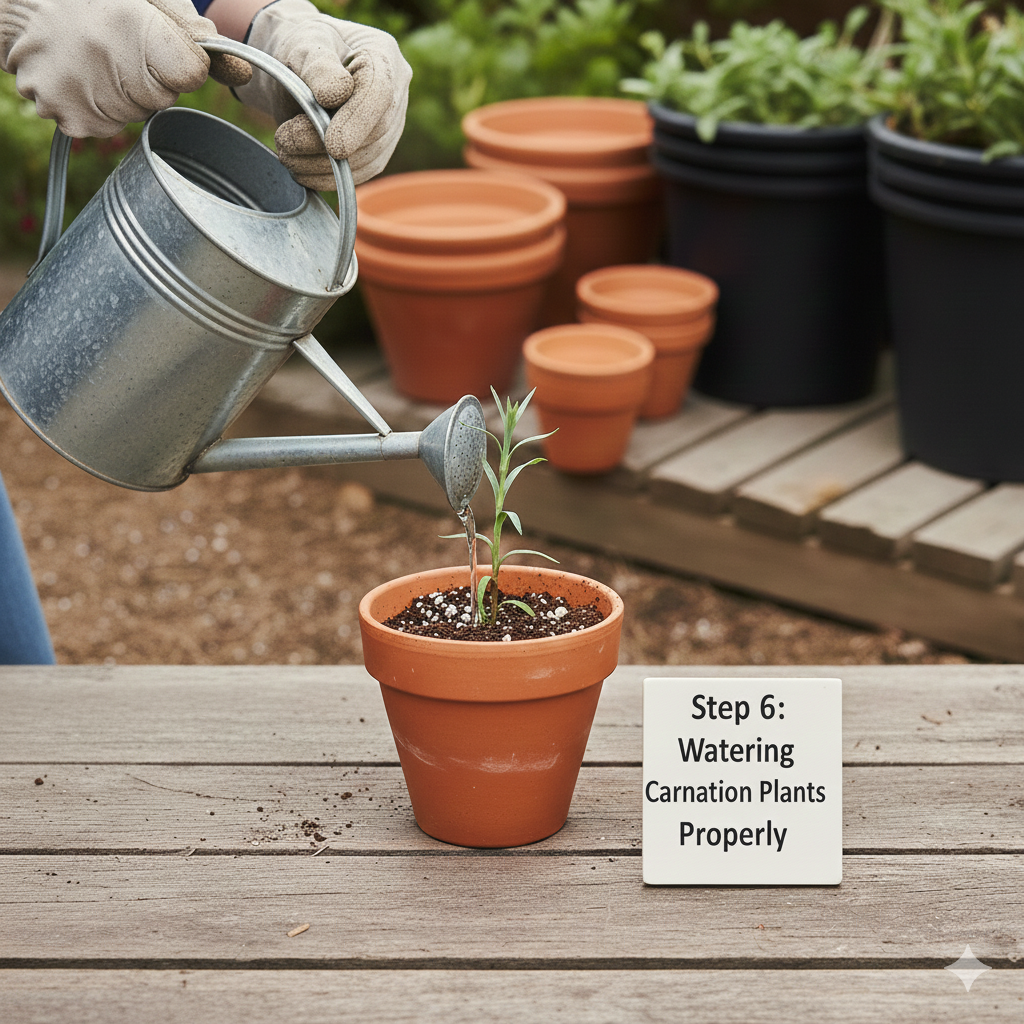
Step 6: Watering Carnation Plants Properly
Water carnations regularly but avoid overwatering. The soil should remain slightly moist, not soggy. Overwatering can cause fungal diseases, while underwatering may result in weak growth.
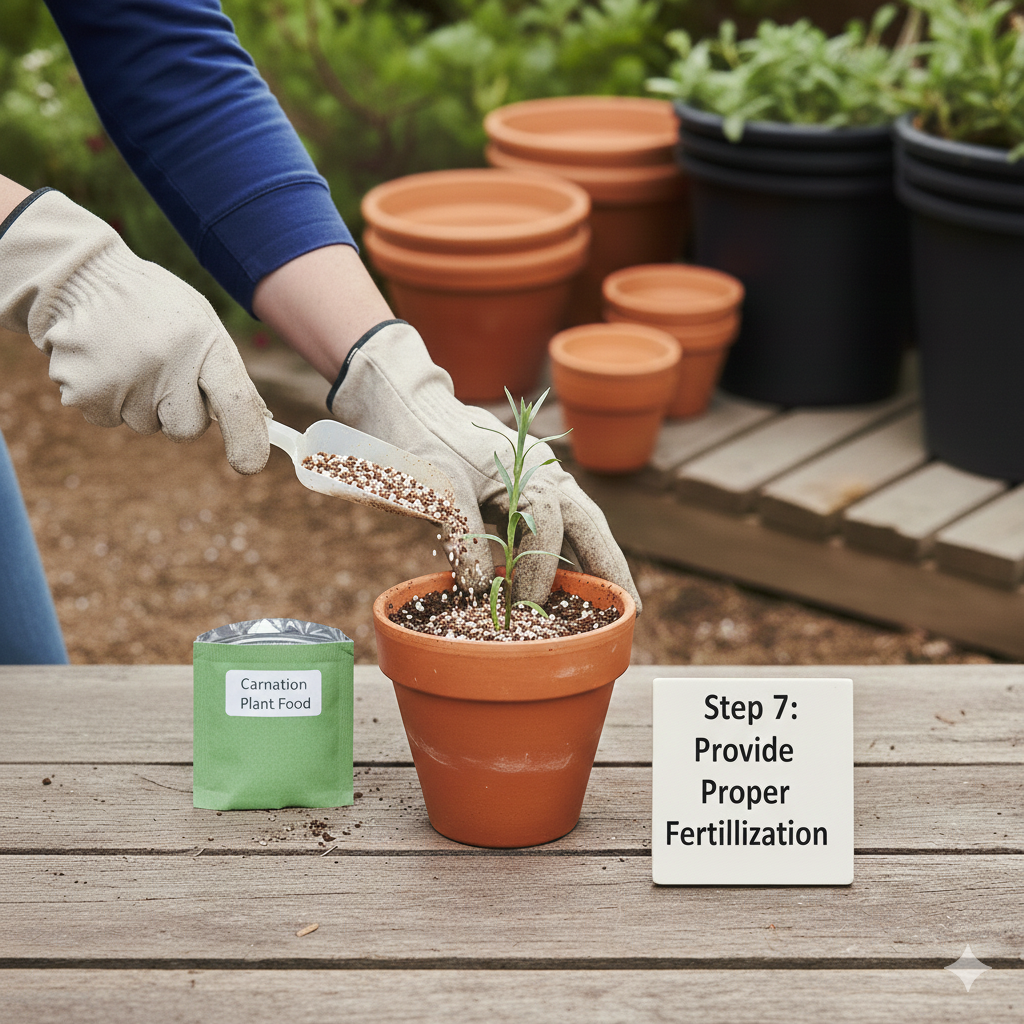
Step 7: Provide Proper Fertilization
Feed your carnation plants every 2–3 weeks using a balanced liquid fertilizer. Organic compost or slow-release fertilizers also work well. Avoid excessive nitrogen, as it promotes leaves rather than flowers.
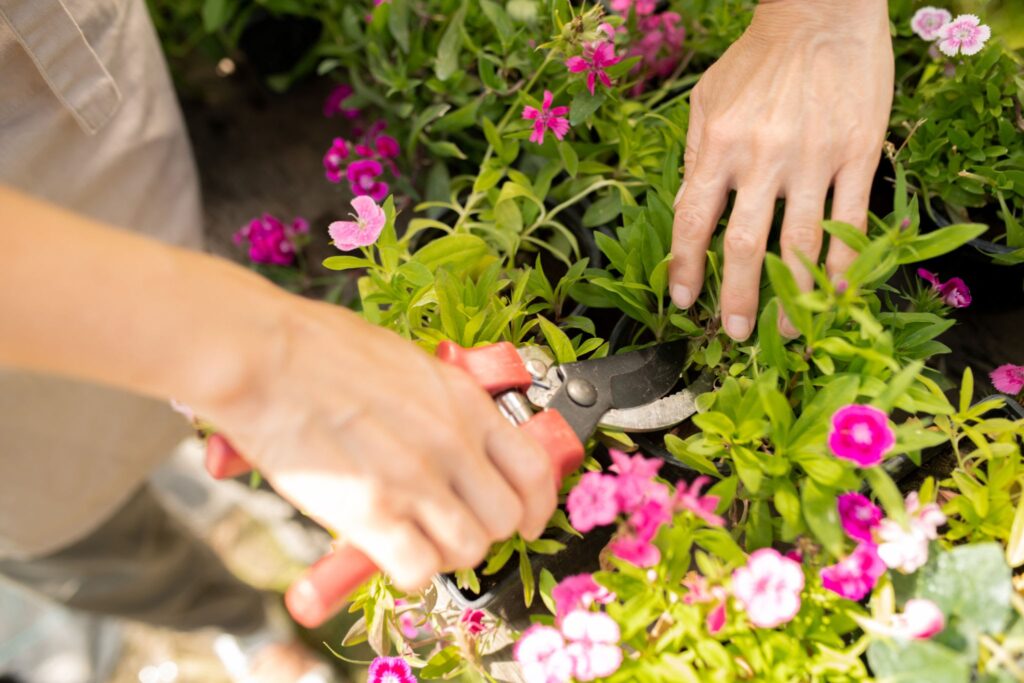
Step 8: Pruning and Deadheading
Pruning encourages bushy growth and more blooms. Remove dead or faded flowers regularly through deadheading. Trim weak or damaged stems to keep the plant healthy and productive.
Step 9: Protect from Pests and Diseases
Common pests include aphids, spider mites, and thrips. Inspect plants regularly and use neem oil or mild insecticidal soap if needed. Good airflow and proper watering help prevent fungal diseases.
Step 10: Support, Mulching, and Bloom Care
Tall carnation varieties may need light staking for support. Apply mulch to retain moisture and regulate soil temperature. With consistent care, carnations will reward you with long-lasting blooms.
Common Problems When Growing Carnations (and Solutions)
- Yellow leaves: Usually caused by overwatering
- Poor flowering: Lack of sunlight or excess nitrogen
- Wilting plants: Root damage or insufficient drainage
Identifying problems early ensures quick recovery.
Read More: Carnation Types
Conclusion
Growing carnation flowers at home is simple, rewarding, and enjoyable when done correctly. By following these 10 simple steps, even beginners can enjoy vibrant blooms throughout the growing season. With proper sunlight, well-draining soil, and regular care, your carnation plants will thrive and beautify your home garden.