Grow Long-Lasting, Fragrant Heirloom Carnations
Discover how to grow long-lasting, fragrant heirloom carnations with expert planting, soil, watering, and care tips. Learn how to cultivate timeless blooms that thrive season after season.
Introduction to Heirloom Carnations
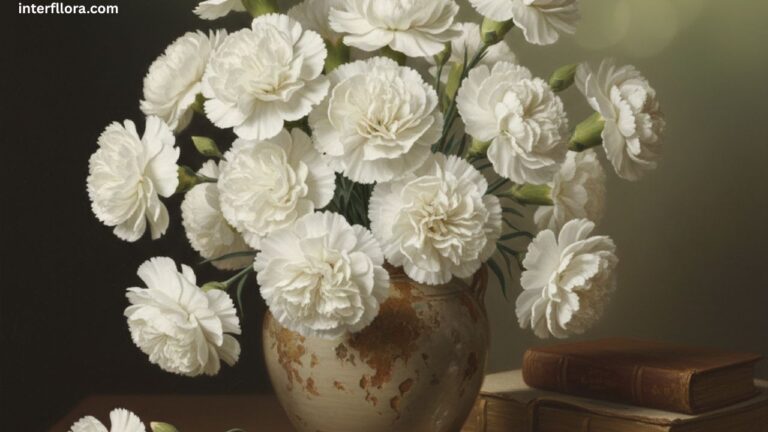
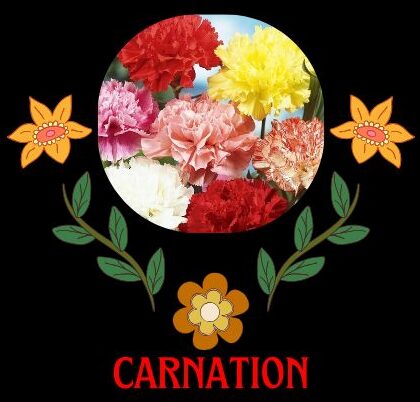
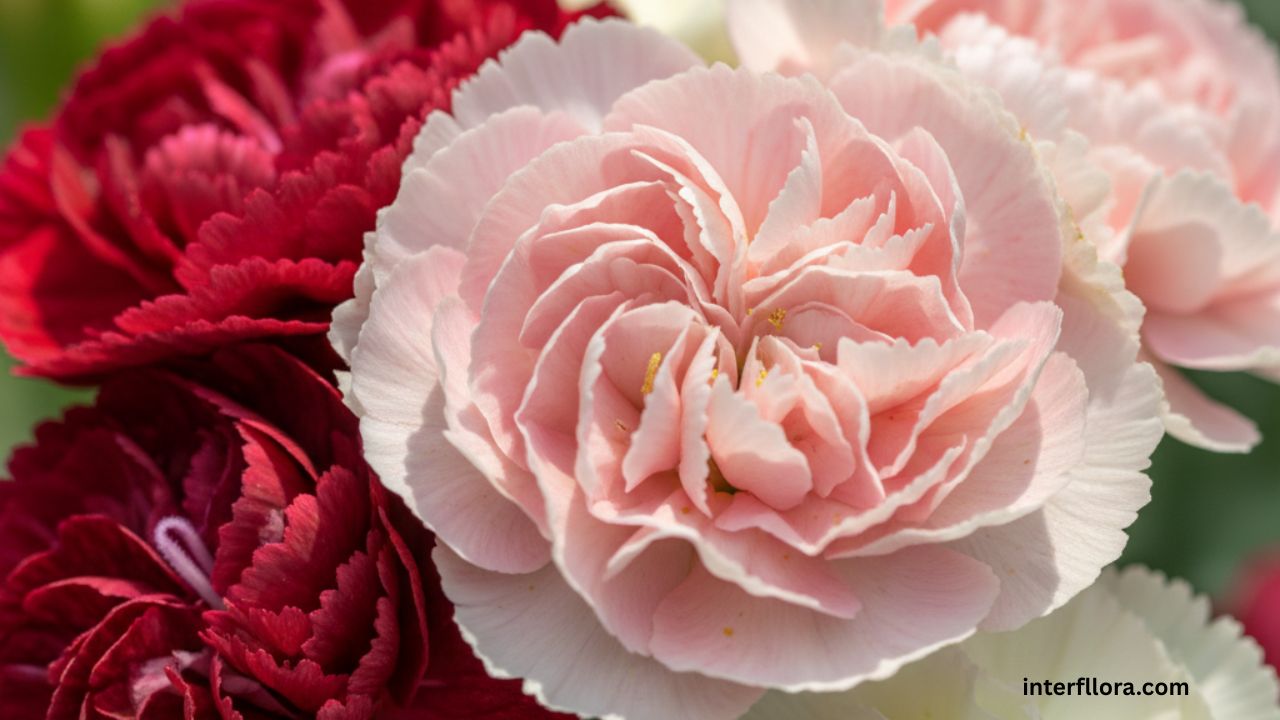
We recognize heirloom carnations as timeless garden treasures that combine exceptional fragrance, elegant form, and remarkable longevity. Unlike modern hybrids bred primarily for transport durability, heirloom carnations, often referred to as Dianthus caryophyllus, offer a depth of scent and character that has been cherished for centuries. These classic varieties connect today’s gardeners with historical gardens, where carnations symbolized love, admiration, and refinement.
We cultivate heirloom carnations not merely for their beauty but for their resilience and adaptability. When properly grown, these plants reward us with long-lasting blooms, a rich clove-like fragrance, and repeated flowering cycles throughout the season. Their appeal extends beyond aesthetics; they support pollinators, enhance biodiversity, and elevate garden design with their structured yet delicate presence.
Why Choose Heirloom Carnations Over Modern Hybrids
We choose heirloom carnations because they prioritize scent, durability, and authenticity. Many modern carnations lack fragrance, while heirloom varieties deliver intense aromatic notes that linger in the air. These plants are also genetically diverse, allowing them to adapt more readily to varying climates and soil conditions.
From a sustainability perspective, heirloom carnations are often open-pollinated, enabling us to save seeds and preserve rare cultivars. Their deep root systems contribute to drought tolerance, and their natural vigor reduces dependency on chemical interventions. By growing heirloom carnations, we invest in plants that thrive naturally while maintaining historical integrity.
Selecting the Best Heirloom Carnation Varieties
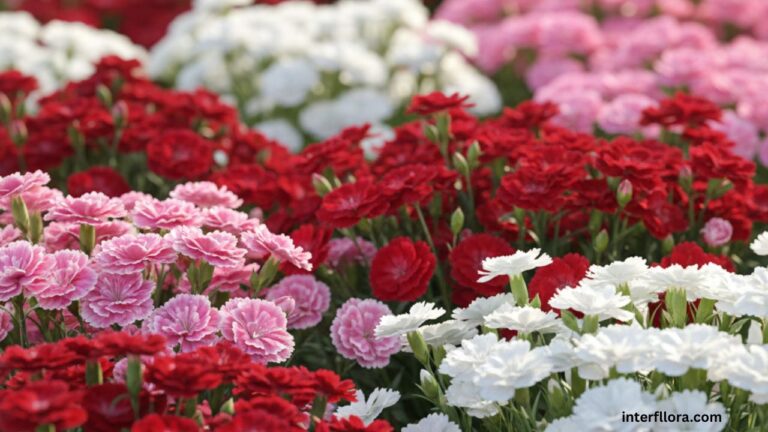
We begin success by selecting cultivars suited to our climate and intended use. Popular heirloom varieties include ‘Grenadin,’ prized for its vibrant colors and compact growth, and ‘Chabaud,’ known for its tall stems and intensely fragrant blooms. For cottage gardens, ‘Malmaison’ carnations deliver large, ruffled flowers with a romantic aesthetic.
We recommend choosing varieties based on bloom time, plant height, and fragrance intensity. Mixing early and late bloomers ensures continuous color, while selecting multiple hues creates visual depth. Quality seeds or healthy cuttings from reputable sources form the foundation of a thriving carnation garden.
Ideal Climate and Growing Conditions
We achieve optimal growth by providing heirloom carnations with cool to moderate temperatures, ideally between 50°F and 75°F. These plants prefer full sun, requiring at least six hours of direct light daily. In warmer regions, afternoon shade helps preserve bloom quality and extend flowering duration.
Proper air circulation is essential. We space plants generously to prevent fungal diseases and promote healthy foliage. Carnations thrive in environments where moisture levels are balanced and humidity is moderate, allowing blooms to remain crisp and vibrant.
Preparing the Perfect Soil
We prioritize well-draining, alkaline to neutral soil with a pH between 6.7 and 7.5. Heavy or compacted soil is amended with coarse sand, compost, or aged manure to enhance aeration and nutrient availability. Rich organic matter supports steady growth and abundant flowering.
Before planting, we loosen soil to a depth of at least 12 inches, ensuring roots can establish deeply. Incorporating bone meal or rock phosphate encourages strong root development and future bloom production.
Planting Techniques for Strong Growth
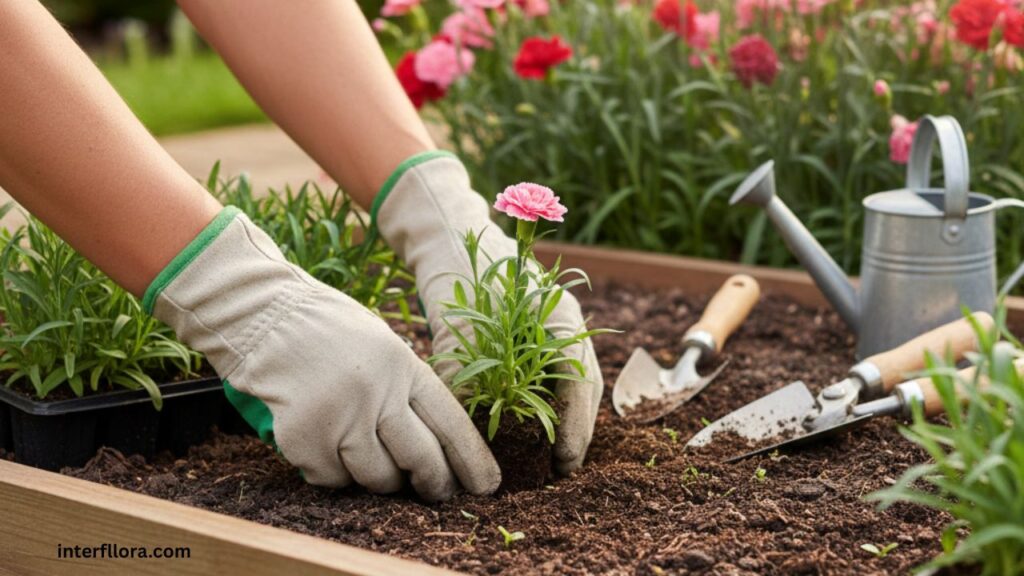
We plant heirloom carnations in early spring or fall, allowing roots to establish before extreme temperatures. When transplanting seedlings or cuttings, we ensure the crown remains slightly above soil level to prevent rot. Proper spacing typically 12 to 18 inches apart supports airflow and reduces disease pressure.
After planting, we water thoroughly to settle the soil and eliminate air pockets. Mulching with straw or fine bark conserves moisture, stabilizes soil temperature, and suppresses weeds without suffocating the crown.
Watering and Fertilization Practices
We maintain consistent moisture without waterlogging. Carnations prefer deep, infrequent watering that encourages root expansion. Overhead watering is avoided to reduce fungal issues; instead, we water at the base.
Fertilization focuses on balance. A low-nitrogen, high-potassium fertilizer supports bloom production and stem strength. We apply feed every four to six weeks during the growing season, adjusting based on plant response and soil fertility.
Pruning and Deadheading for Longevity
We extend bloom life through regular deadheading, removing spent flowers just above a healthy node. This practice redirects energy into new growth and continuous flowering. Light pruning after major bloom cycles rejuvenates plants and maintains compact form. At season’s end, we cut plants back by one-third to encourage vigorous regrowth. Clean tools are essential to prevent disease transmission.
Managing Pests and Diseases Naturally
We protect heirloom carnations using integrated pest management strategies. Aphids, spider mites, and thrips are controlled through beneficial insects, neem oil, or insecticidal soap. Proper spacing and airflow prevent common diseases such as rust and fusarium wilt. Healthy soil and consistent care remain the most effective defenses. Strong plants naturally resist pests and recover quickly from minor damage.
Harvesting for Long-Lasting Cut Flowers
We harvest blooms early in the morning when stems are fully hydrated. Cutting flowers at the half-open stage ensures maximum vase life. Stems are immediately placed in clean water with floral preservative to maintain freshness. Regular harvesting encourages further flowering and keeps plants productive throughout the season.
Overwintering and Long-Term Care
We protect perennial heirloom carnations during winter by applying mulch in colder regions. In mild climates, plants remain evergreen with minimal intervention. Container-grown carnations are moved to sheltered locations to prevent root damage. Annual soil renewal and division every three to four years keep plants vigorous and productive.
Designing with Heirloom Carnations
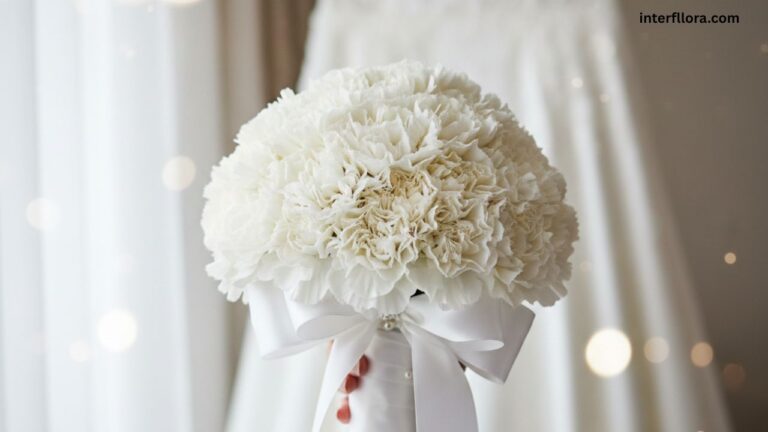
We integrate heirloom carnations into borders, cutting gardens, and container displays. Their upright habit pairs beautifully with lavender, roses, and ornamental grasses. Color coordination enhances visual harmony, while fragrance placement near pathways elevates sensory appeal.
Conclusion
We grow long-lasting, fragrant heirloom carnations by honoring their natural preferences and historical heritage. Through thoughtful variety selection, meticulous soil preparation, balanced care, and sustainable practices, these exceptional flowers reward us with beauty, scent, and resilience season after season. By cultivating heirloom carnations, we preserve botanical legacy while enriching modern gardens with timeless elegance.