How to Solve Carnation Problems and Keep Plants Healthy
Learn how to solve common carnation problems and keep your plants healthy year-round. Discover expert tips on pests, diseases, watering, soil care, and proven methods to grow strong, vibrant, long-lasting carnation blooms in gardens and pots.
Introduction to Carnation Care and Common Challenges
Carnations might look delicate and elegant, but don’t be fooled by their ruffled petals and sweet fragrance. These classic garden favorites are tougher than they appear if you understand what they need. Many gardeners struggle with carnations because the problems don’t always shout for attention. Instead, they whisper through yellowing leaves, fewer blooms, or weak stems. If you’ve ever stared at your carnation plant wondering, “What am I doing wrong?” you’re not alone.
The truth is, most carnation problems come from a handful of recurring issues: improper watering, poor soil conditions, pest invasions, or environmental stress. The good news? Nearly all of these issues are solvable once you know how to recognize them early. Think of carnation care like maintaining a balanced diet and lifestyle for a human. Too much of one thing water, fertilizer, or heat can be just as harmful as too little.
In this guide, we’ll walk through every major carnation problem gardeners face and break down practical, proven solutions. No confusing jargon. No vague advice. Just clear, actionable steps you can follow whether you’re growing carnations in the ground, in pots, or even indoors. By the end, you’ll not only know how to fix problems but also how to prevent them entirely. Ready to turn struggling carnations into blooming showstoppers? Let’s dig in.
Understanding Carnations: Growth Habits and Plant Needs
Before you can fix carnation problems, you need to understand how these plants naturally grow and what makes them thrive. Carnations, scientifically known as Dianthus caryophyllus, prefer stability. They don’t like sudden changes, and they definitely don’t enjoy being neglected or over-coddled. When their basic needs are met, they reward you with long-lasting, vibrant blooms.
Carnations love cool to moderate temperatures, typically thriving between 50°F and 70°F. Excessive heat can stress them, while frost can damage young growth. They perform best in areas where summers aren’t brutally hot and winters aren’t extreme. If you live in a warmer climate, afternoon shade becomes crucial.
Soil plays a massive role in carnation health. These plants prefer well-draining, slightly alkaline soil. Heavy clay soil is a silent killer, trapping moisture around roots and inviting fungal diseases. If water doesn’t drain easily, carnations will suffer no matter how much sunlight they get.
Speaking of sunlight, carnations need at least 4–6 hours of direct sun daily. Too little sun leads to leggy growth and poor flowering, while too much intense sun can scorch leaves. Proper spacing is also essential. Crowded carnations trap moisture and block airflow, creating a perfect environment for disease.
When you understand these growth habits, diagnosing problems becomes much easier. Instead of guessing, you’ll start connecting symptoms to specific causes like a plant detective solving a mystery.
Identifying Common Carnation Problems Early
One of the biggest mistakes gardeners make is waiting too long to act. Carnations often show subtle signs before problems spiral out of control. Learning to spot these early warnings can save you time, money, and heartbreak.
Common early symptoms include:
- Yellowing or browning leaves
- Stunted growth
- Wilting despite moist soil
- Fewer or smaller blooms
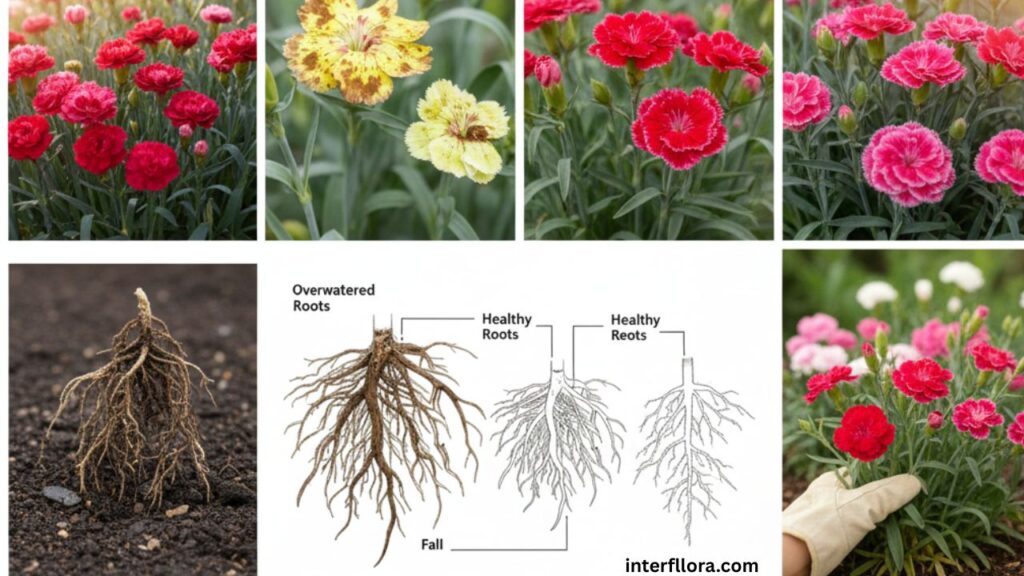
- Spots, streaks, or powdery coatings on leaves
These signs are your plant’s way of waving a red flag. Ignoring them is like ignoring a check-engine light it won’t end well. Early detection allows you to correct watering habits, adjust soil conditions, or address pests before irreversible damage occurs.
Make it a habit to inspect your carnations at least twice a week. Look under leaves, around the base of the plant, and along the stems. Healthy carnations should have firm stems, vibrant green foliage, and buds that develop evenly. Anything outside that norm deserves attention.
Think of this step as preventive healthcare. The earlier you act, the less drastic your solution needs to be.
Soil-Related Problems in Carnations
Poor Drainage and Root Stress
Soil drainage issues are one of the most common and destructive problems for carnations. When soil retains too much moisture, roots essentially drown. Oxygen can’t reach them, and root rot begins to set in. You might notice wilting even though the soil is wet, or a foul smell when you dig near the roots.
To fix this, amend heavy soil with:
- Coarse sand
- Perlite
- Compost or aged organic matter
Raised beds are an excellent solution for chronic drainage issues. If growing in containers, always ensure drainage holes are present and never let pots sit in standing water.
Nutrient Deficiencies and Imbalances
Carnations need balanced nutrition. Too little nitrogen leads to pale, weak growth, while too much results in lush foliage but few flowers. Phosphorus supports blooming, and potassium strengthens overall plant health.
A soil test is your best friend here. It removes guesswork and tells you exactly what your soil lacks or has too much of. Use a balanced fertilizer or one slightly higher in phosphorus during the blooming stage.
Watering Issues That Affect Carnation Health
Overwatering and Root Rot
Overwatering is often done with good intentions. Unfortunately, it’s one of the fastest ways to kill carnations. Constantly wet soil suffocates roots and encourages fungal growth. Symptoms include yellow leaves, soft stems, and overall plant collapse.
Water carnations only when the top inch of soil feels dry. Deep, infrequent watering is far better than light daily sprinkles.
Underwatering and Drought Stress
On the flip side, underwatering causes wilting, crispy leaf edges, and poor flowering. Carnations don’t like extremes. Consistent moisture is key, especially during bud formation and flowering.
Mulching helps regulate moisture levels and keeps roots cool.
Light and Temperature Problems
Insufficient or Excessive Sunlight
Too little sunlight leads to leggy plants with few blooms. Too much harsh sun can scorch leaves. Aim for morning sun and light afternoon shade in hot climates.
Heat Stress and Cold Damage
High temperatures cause flower drop and faded blooms. Cold snaps can damage new growth. Use shade cloths in summer and frost covers in winter when needed.
Pest Problems in Carnations
Pests are like uninvited guests at a garden party they show up quietly, eat everything in sight, and leave chaos behind. Carnations are particularly attractive to several common garden pests, and if you don’t step in early, these tiny invaders can weaken or even kill your plants.
Aphids, Thrips, and Spider Mites
Aphids are among the most common carnation pests. These tiny, pear-shaped insects cluster on new growth and flower buds, sucking sap from the plant. You’ll often notice curled leaves, sticky residue (called honeydew), and even ants farming aphids like dairy cows. Thrips are even sneakier. They’re slender, fast-moving insects that cause silvery streaks on leaves and deformed flowers. Spider mites, though nearly invisible, leave behind fine webbing and stippled, yellowing leaves.
The best way to control these pests is through consistent monitoring and early intervention. A strong spray of water can knock aphids and mites off the plant. Neem oil and insecticidal soap work wonders when applied regularly. For severe infestations, targeted chemical insecticides may be necessary, but they should always be a last resort.
Healthy plants are less appealing to pests, so proper watering, spacing, and nutrition go a long way in prevention. Think of pest control as a balance when your carnations are strong, pests struggle to take hold.
Cutworms and Caterpillars
Cutworms attack at the base of the plant, often severing young carnations overnight. Caterpillars chew through leaves and buds, leaving jagged holes and damaged flowers. Hand-picking works surprisingly well, especially early in the morning or evening when these pests are most active.
Using collars around young plants, encouraging beneficial insects like ladybugs, and applying organic controls such as Bacillus thuringiensis can keep these pests under control without harming the rest of your garden ecosystem.
Fungal Diseases Affecting Carnations
Fungal diseases are one of the biggest threats to carnation health, especially in humid or poorly ventilated conditions. Once fungi establish themselves, they spread fast so speed is everything.
Fusarium Wilt
Fusarium wilt is a soil-borne disease that causes yellowing, wilting, and eventual plant death. Unfortunately, once a plant is infected, there’s no cure. The fungus blocks water movement inside the plant, making it look underwatered even when the soil is moist.
The only real solution is prevention:
- Use disease-free planting material
- Avoid planting carnations in the same soil year after year
- Improve drainage and soil health
Remove and destroy infected plants immediately to prevent spread.
Rust and Leaf Spot Diseases
Rust appears as orange or brown pustules on the undersides of leaves, while leaf spot diseases cause dark, irregular spots surrounded by yellow halos. Both thrive in moist conditions and poor air circulation.
To control these issues:
- Water at the base of the plant, not overhead
- Space plants properly
- Apply fungicides when symptoms first appear
Good sanitation removing fallen leaves and debris dramatically reduces fungal spores in the garden.
Bacterial and Viral Issues in Carnation Plants
Not all plant problems are fungal or pest-related. Bacteria and viruses can also wreak havoc on carnations, and these are often harder to manage.
Bacterial Wilt and Blight
Bacterial diseases often cause sudden wilting, blackened stems, and slimy lesions. Unlike fungal problems, bacteria spread through splashing water, contaminated tools, and even your hands.
Once bacteria infect a plant, removal is usually the only option. Sterilize tools between cuts, avoid working with wet plants, and rotate crops to reduce the risk.
Viral Infections and Their Impact
Viruses cause distorted growth, streaked petals, and mosaic patterns on leaves. There is no cure for viral infections. Infected plants should be removed immediately to protect healthy ones.
Viruses often spread through pests like aphids, which makes pest control a critical part of disease prevention.
Stem, Leaf, and Flower Disorders
Sometimes carnations struggle even without pests or diseases. Environmental stress and care mistakes can cause visible disorders.
Yellowing Leaves and Weak Stems
Yellow leaves usually signal nutrient deficiencies, poor drainage, or overwatering. Weak stems often result from low light or excess nitrogen. Adjust fertilization, improve sunlight exposure, and correct watering habits to restore balance.
Bud Drop and Poor Flowering
If buds form but fail to open, stress is usually the culprit. Sudden temperature changes, drought, or over-fertilizing can cause plants to abort flowers. Consistency is key steady care leads to reliable blooms.
Pruning and Deadheading Mistakes
Pruning encourages bushier growth and more flowers, but incorrect pruning can backfire.
Incorrect Pruning Techniques
Cutting too much at once or using dull tools damages plants. Always make clean cuts just above a leaf node. Avoid heavy pruning during extreme heat or cold.
Timing Issues
Deadheading spent blooms regularly redirects energy into new flowers. Prune lightly throughout the growing season rather than all at once.
Fertilization Problems and How to Fix Them
Over-Fertilizing vs Under-Fertilizing
Too much fertilizer causes leafy growth with few blooms and increases disease risk. Too little leads to weak plants and poor flowering. Use a balanced fertilizer every 4–6 weeks during active growth.
Best Fertilizers for Carnations
Carnations respond well to fertilizers with moderate nitrogen and higher phosphorus. Slow-release formulas provide steady nutrition without overwhelming the plant.
Preventive Care for Healthy Carnations
Crop Rotation and Sanitation
Never plant carnations in the same spot year after year. Remove plant debris, disinfect tools, and keep the growing area clean.
Companion Planting and Spacing
Good airflow reduces disease pressure. Companion plants like marigolds can help deter pests naturally.
Seasonal Care Tips for Carnations
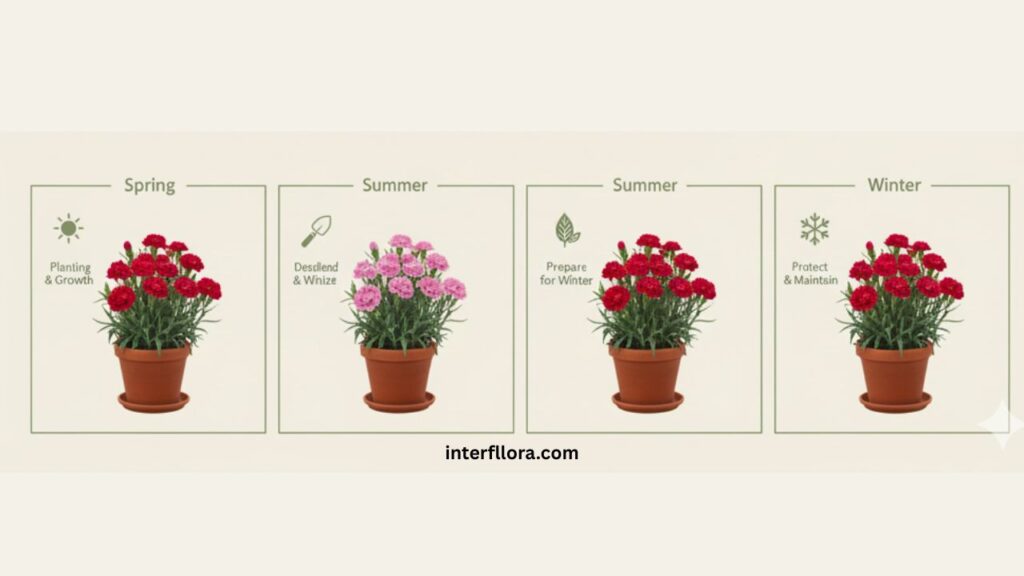
Spring and Summer Maintenance
Spring is all about growth feed, water, and monitor closely. In summer, focus on heat protection and consistent moisture.
Fall and Winter Protection
Cut back spent growth in fall and mulch roots to protect against cold. In colder regions, container-grown carnations should be moved indoors or sheltered.
Growing Carnations in Pots vs Garden Beds
Container-Specific Problems
Potted carnations dry out faster and require more frequent feeding. Choose breathable pots and well-draining soil.
Solutions for Limited Root Space
Repot annually and avoid overcrowding. Healthy roots equal healthy flowers.
Organic and Chemical Treatment Options
When to Use Organic Methods
Neem oil, compost teas, and beneficial insects are excellent first lines of defense.
Safe Use of Chemical Treatments
Use chemicals only when necessary and follow instructions carefully to avoid harming beneficial organisms.
Long-Term Carnation Health Management
Monitoring and Maintenance Routines
Regular inspection, balanced care, and patience are the foundations of success.
Creating the Ideal Growing Environment
When carnations feel “at home,” problems fade away and blooms flourish.
Conclusion
Healthy carnations aren’t about luck they’re about understanding, consistency, and care. When you learn to read your plants, respond quickly to problems, and provide the right environment, carnations reward you with vibrant color, strong stems, and long-lasting blooms. Treat them well, and they’ll be the stars of your garden season after season.