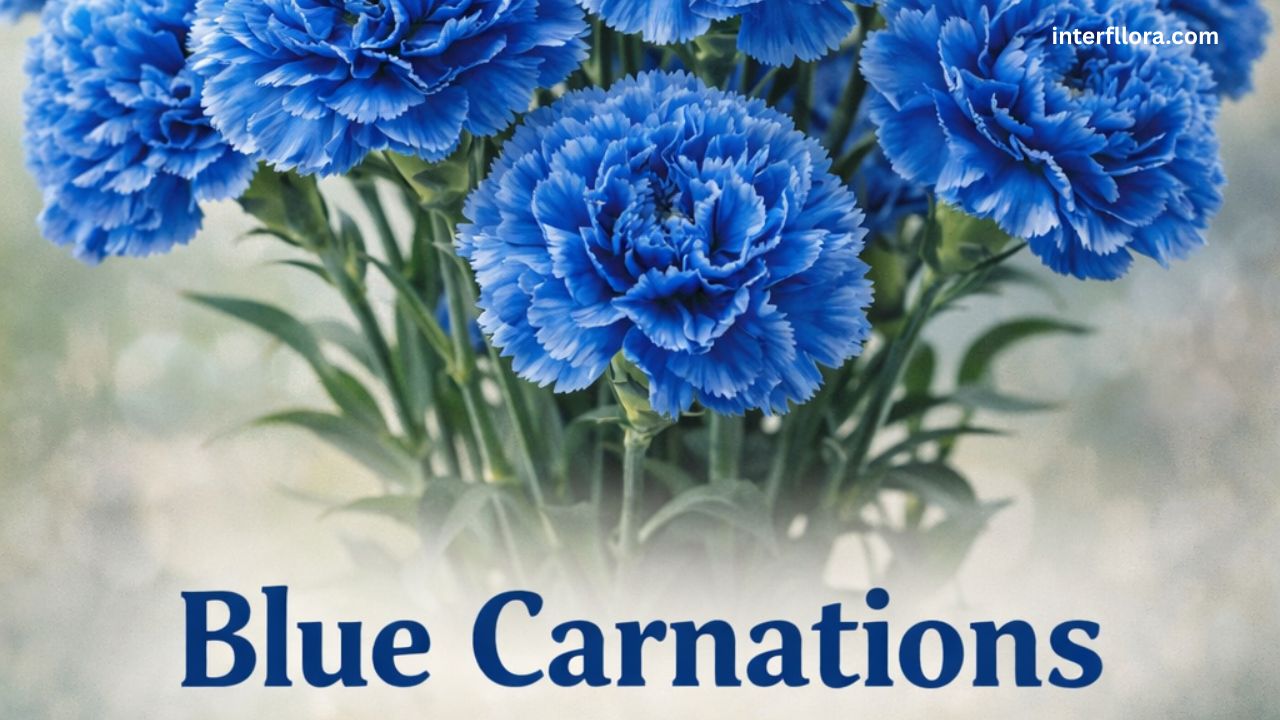
How to Care for Blue Carnations to Make Them Last Longer
Discover expert tips on how to care for blue carnations, from proper watering and placement to daily maintenance, ensuring vibrant color and longer-lasting blooms.
Introduction: The Unique Charm of Blue Carnations
We often associate flowers with emotions, and blue carnations stand apart as symbols of mystery, creativity, and calm elegance. Their striking color instantly captures attention, making them a popular choice for modern bouquets, events, and meaningful gifts. Yet, as captivating as they are, blue carnations require thoughtful care to maintain their vibrancy and longevity. Without proper handling, their petals can fade, stems weaken, and blooms wilt far sooner than expected.
We believe caring for blue carnations is both an art and a science. These flowers, especially dyed varieties, are more sensitive to environmental factors such as water quality, temperature, and light exposure. When we understand their unique needs and apply consistent care practices, we can significantly extend their vase life often well beyond the average expectation.
In this comprehensive guide, we walk through every essential step required to keep blue carnations fresh and radiant for as long as possible. From selecting the freshest stems to mastering daily maintenance routines, we cover proven methods that florists rely on. Whether we are decorating our home, preparing floral arrangements for special occasions, or managing cut flowers professionally, these techniques ensure blue carnations remain visually stunning and structurally healthy.
By following this guide, we position ourselves to enjoy longer-lasting blooms while preserving the rich blue tones that make carnations so extraordinary.
Understanding Blue Carnations and Their Symbolism
Blue carnations are admired not only for their appearance but also for the deeper meanings they convey. Traditionally, carnations symbolize love, fascination, and distinction. When dyed blue, these flowers take on additional symbolism associated with tranquility, imagination, and uniqueness. This makes them ideal for expressing rare emotions and unconventional sentiments.
Most blue carnations available in the market are white carnations that have been professionally dyed using food-safe floral dyes. This dyeing process allows the petals to absorb pigment through the stem, creating a uniform blue shade. Because of this treatment, dyed carnations require more attentive care than naturally colored varieties. The dye can alter water uptake efficiency, making hydration a critical concern.
Understanding whether we are working with dyed or specialty-bred carnations helps us tailor our care approach. Dyed carnations are more prone to color bleeding, petal bruising, and premature wilting if exposed to excessive heat or direct sunlight. Recognizing these sensitivities allows us to create an environment that supports both color retention and bloom longevity.
By respecting the symbolic and physical nature of blue carnations, we ensure they remain a lasting representation of elegance and thoughtful intention.
Selecting the Freshest Blue Carnations
Longevity begins at the point of purchase. When we select high-quality blue carnations, we dramatically increase the chances of extended vase life. Fresh carnations exhibit firm, upright stems and tightly packed petals with rich, even coloration. The petals should feel smooth and resilient, not dry or brittle.
We should avoid carnations with yellowing leaves, bent stems, or petals that show signs of browning at the edges. These indicators often point to dehydration or age. Additionally, we examine the calyx the green base holding the petals. A healthy calyx is tight and intact, supporting the bloom fully without splitting.
Purchasing from reputable florists or suppliers who store flowers in temperature-controlled environments further ensures freshness. When possible, we ask about delivery schedules to select blooms that have arrived recently.
By being selective and attentive during purchase, we set the foundation for blue carnations that last longer and maintain their vivid beauty.
Read More:
How to Grow Carnations Flowers
Carnation Flower Meaning and Care Guide
Preparing Blue Carnations Before Arranging
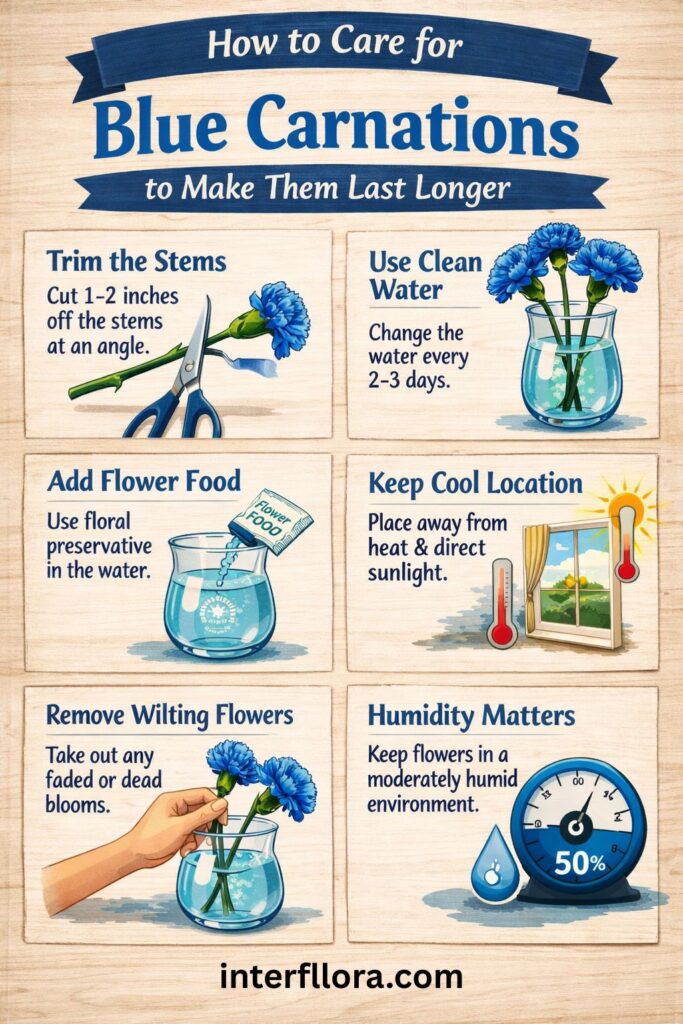
Preparation is a crucial step that directly impacts how well blue carnations absorb water. As soon as we bring the flowers home, we begin by trimming the stems. Using sharp, clean scissors or floral shears, we cut each stem at a 45-degree angle. This increases the surface area for water absorption and prevents the stem from resting flat against the vase bottom.
We also remove any leaves that would fall below the waterline. Submerged foliage promotes bacterial growth, which clogs stems and shortens flower life. Clean stems allow water to remain fresh and accessible.
Timing matters. We prepare carnations immediately upon arrival, avoiding unnecessary delays that can cause air bubbles to form in the stems. This simple yet critical process ensures optimal hydration from the very start.
Choosing the Right Vase for Blue Carnations
The vase plays a more significant role than many realize. We select a vase that provides enough height and width to support the stems without crowding. Overcrowding restricts airflow and increases the risk of bacterial contamination.
Before use, we thoroughly wash the vase with warm water and mild soap, rinsing away all residue. Even trace amounts of bacteria can shorten the lifespan of blue carnations. A clean vase creates a sterile environment that supports healthy water uptake.
Clear glass vases are often preferred, as they allow us to monitor water clarity and cleanliness. By choosing the right vase and maintaining hygiene, we create a stable foundation for long-lasting blooms.
Water Quality and Temperature Matters
Water is the lifeline of cut flowers, and blue carnations are no exception. We use clean, filtered water whenever possible to minimize exposure to impurities and chemicals. Chlorine and fluoride found in tap water can stress the flowers, particularly dyed varieties.
Water temperature should be lukewarm not cold or hot. Lukewarm water allows stems to hydrate more efficiently, promoting faster uptake. Cold water slows absorption, while hot water can damage delicate tissues.
We fill the vase with enough water to submerge the lower third of the stems. Maintaining consistent water levels prevents dehydration and ensures continuous nourishment.
Using Floral Preservatives Effectively
Floral preservatives significantly extend the life of blue carnations. These solutions contain a balanced mix of nutrients, acidifiers, and antibacterial agents. When used correctly, they improve water absorption, inhibit bacterial growth, and support bloom development.
We always follow the recommended dosage. Overuse can overwhelm the flowers, while underuse reduces effectiveness. If commercial preservatives are unavailable, a homemade solution using sugar, lemon juice, and a small amount of bleach can serve as a temporary alternative.
Properly mixed preservatives keep water clean and provide essential nourishment, allowing blue carnations to thrive for days longer than untreated stems.
Correct Placement for Longer-Lasting Blooms
Where we place blue carnations directly affects their lifespan. We choose a location with bright, indirect light. Direct sunlight accelerates wilting and causes color fading, especially in dyed petals.
We also keep arrangements away from heat sources such as radiators, electronics, and kitchens. Stable, cool temperatures slow metabolic processes, preserving freshness.
Avoiding drafts from windows and air conditioners prevents dehydration. Strategic placement ensures blue carnations remain vibrant and upright.
Daily Maintenance for Blue Carnations
Consistency is key to longevity. We change the water every one to two days, thoroughly rinsing the vase each time. Fresh water reduces bacterial buildup and maintains hydration efficiency.
Each water change is an opportunity to recut stems slightly, removing any blockages that may have formed. This practice revitalizes water uptake and keeps blooms perky.
We also remove any fading petals or leaves promptly. Decaying plant matter releases ethylene gas, which accelerates wilting in nearby flowers.
Managing Ethylene Exposure
Ethylene gas is a silent enemy of cut flowers. Produced by ripening fruits and decaying plant matter, ethylene causes premature aging in carnations. We keep blue carnations far from fruit bowls and compost areas.
Regular maintenance and clean surroundings minimize ethylene exposure. This proactive approach significantly extends bloom life.
Hydration and Humidity Control
Blue carnations thrive in moderate humidity. Extremely dry air leads to moisture loss, while excessive humidity encourages mold growth. We aim for balanced indoor conditions.
Light misting is generally unnecessary and can damage dyed petals. Proper hydration through stems remains the most effective approach.
Common Problems and How to Fix Them
Wilting often results from blocked stems or dirty water. Immediate recutting and water replacement usually resolve the issue. Discoloration may indicate excessive light or chemical exposure, requiring relocation.
Extending Vase Life Beyond Expectations
For overnight preservation, we move arrangements to a cooler room. Some florists recommend refrigeration, but we avoid this unless humidity is controlled, as cold air can dry petals.
Blue Carnations in Floral Arrangements
When pairing blue carnations with other flowers, we select varieties with similar care needs. White roses, baby’s breath, and eucalyptus complement both visually and structurally.
Conclusion: Keeping Blue Carnations Fresh and Vibrant
We achieve long-lasting blue carnations through mindful selection, proper preparation, and consistent care. Each step builds upon the last, creating an environment where these stunning blooms can truly flourish. With the right approach, blue carnations reward us with enduring beauty and unforgettable color.