
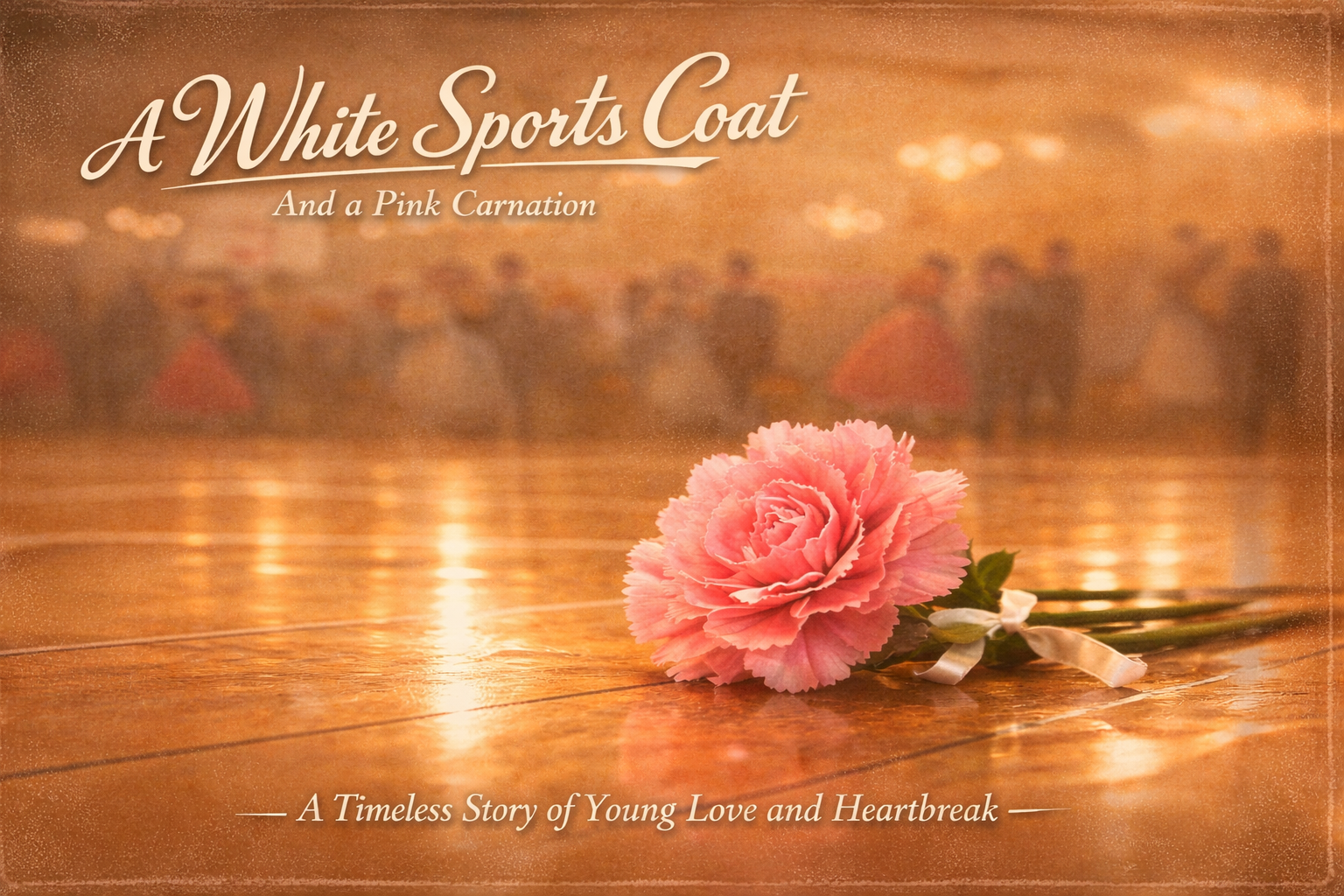
A White Sports Coat and a Pink Carnation Song
Discover the story behind “A White Sports Coat and a Pink Carnation”, Marty Robbins’ timeless 1957 hit. Explore its meaning, lyrics, history, chart success, and lasting impact on 1950s pop and country music.
A White Sports Coat and a Pink Carnation
Few songs capture the innocence, heartbreak, and emotional intensity of teenage life quite like “A White Sports Coat and a Pink Carnation.” Released in the late 1950s, this unforgettable ballad became an anthem for young love and dashed expectations. We often associate the era with jukeboxes, soda fountains, and high school dances, and this song fits perfectly into that nostalgic landscape. Its tender melody and heartfelt lyrics evoke a time when romance was simple, yet emotions ran deep and true.
What makes this song endure decade after decade? It is more than just a catchy tune. It is a narrative—one that tells the story of anticipation and disappointment wrapped in the symbolism of a carefully chosen outfit. The image of a young man dressed in a white sports coat with a pink carnation pinned proudly to his lapel paints a vivid picture. We can almost see him standing under the gymnasium lights, hopeful and nervous, only to face heartbreak.
The song’s emotional accessibility is part of its magic. We do not need to have lived in the 1950s to understand the sting of being stood up or the vulnerability of putting ourselves out there for someone we care about. That universal theme of youthful heartbreak continues to resonate. The melody lingers in our minds, while the story lingers in our hearts.
In exploring the origins, meaning, and lasting influence of this classic, we uncover why “A White Sports Coat and a Pink Carnation” remains an essential piece of American musical history.
The Origins of the Song
The Songwriters Behind the Classic
The creation of “A White Sports Coat and a Pink Carnation” was the result of inspired collaboration. Written by Bernie Lowe and Irv Kalus, the song was crafted during a period when American pop and country music were undergoing significant transformation. The late 1950s represented a crossroads between traditional crooning ballads and the energetic rise of rock and roll. Songwriters needed to strike a delicate balance, capturing youthful energy without abandoning melodic sophistication.
Lowe and Kalus succeeded by blending simplicity with emotional depth. Their lyrics were straightforward, yet evocative. They understood the teenage audience emerging as a powerful cultural force. Post-war prosperity meant more young people had spending money, and record companies quickly recognized this demographic as vital. The songwriters tapped directly into teenage anxieties and dreams, crafting a storyline that felt authentic rather than manufactured.
The genius of the composition lies in its clarity. The central image a white sports coat paired with a pink carnation serves as both a literal outfit and a metaphor for hope. The writers avoided complicated metaphors, instead choosing imagery that felt grounded in real life. Anyone attending a prom or school dance could relate.
By focusing on emotional sincerity rather than elaborate storytelling, Lowe and Kalus created a timeless ballad. Their work demonstrates how powerful simplicity can be when it speaks directly to universal feelings of love, expectation, and heartbreak.
The Cultural Climate of the 1950s
To fully appreciate the song, we must consider the cultural atmosphere in which it was born. The 1950s were marked by optimism, stability, and rapid social change. Teenagers began to develop a distinct identity separate from their parents. Music became one of their primary forms of expression.
High school dances were social milestones. Formal attire symbolized maturity and romance. A white sports coat was not merely clothing; it was a statement. It represented effort, pride, and hope for a magical evening. The pink carnation, delicate and romantic, added a layer of sentimentality.
Yet beneath the polished exterior of 1950s America, emotional turbulence simmered. Adolescence has always been a time of vulnerability. The song perfectly captured this contrast between outward presentation and inner uncertainty. In doing so, it became more than entertainment; it became a mirror reflecting the hopes and fears of an entire generation.
Marty Robbins: The Voice That Defined the Song
Early Life and Musical Beginnings
Although written by Lowe and Kalus, it was Marty Robbins who immortalized the song. Born in Glendale, Arizona, Robbins grew up surrounded by Western ballads and country storytelling traditions. His early exposure to music came from family gatherings where songs were passed down like heirlooms.
Robbins’ musical style blended country warmth with pop accessibility. His smooth, expressive voice allowed him to convey vulnerability without losing strength. Before achieving mainstream success, he honed his craft performing on local radio stations and small venues. These early experiences shaped his ability to connect intimately with listeners.
His upbringing during the Great Depression also influenced his storytelling sensibility. He understood struggle, longing, and perseverance. When he sang about heartbreak, it felt authentic. There was no exaggeration, only genuine emotion.
By the time “A White Sports Coat and a Pink Carnation” entered his repertoire, Robbins had developed a distinctive vocal style gentle yet commanding, tender yet confident. That balance made the song unforgettable.
Robbins’ Rise to Stardom
The release of the song in 1957 marked a turning point in Robbins’ career. It soared up the charts, reaching impressive positions on both country and pop rankings. This crossover appeal was significant. It demonstrated that heartfelt storytelling could transcend genre boundaries.
Robbins became a household name. Teenagers embraced him as a relatable voice, while adults appreciated his polished delivery. The song’s success laid the foundation for his future hits, including the legendary “El Paso.”
His performance style also contributed to the song’s impact. On stage, Robbins exuded sincerity. He did not rely on flashy theatrics. Instead, he let the story speak for itself. Audiences felt as though he was sharing a personal memory rather than performing a commercial hit.
Through Robbins’ voice, “A White Sports Coat and a Pink Carnation” transformed from a well-written tune into a cultural phenomenon.
Lyrics Breakdown and Deeper Meaning
Symbolism of the White Sports Coat
The white sports coat is more than fabric and tailoring. It symbolizes anticipation and purity of intention. White often represents innocence, and in this context, it underscores the youthful naivety of the protagonist. He dresses carefully, believing that effort guarantees a happy outcome.
Clothing in music frequently acts as shorthand for emotional states. Here, the coat reflects hope. It suggests preparation for a milestone event likely a prom or formal dance. We can almost feel the starch in the collar and the nervous adjustments before stepping out the door.
When the evening unravels, the coat becomes a silent witness to disappointment. The same garment that symbolized joy now embodies heartbreak. That transformation is powerful because it mirrors how quickly emotions can shift.
The imagery remains relatable today. We have all dressed up for something meaningful an interview, a date, a celebration only to face unexpected outcomes. The white sports coat becomes a universal metaphor for vulnerability.
The Pink Carnation as a Motif of Young Love
The pink carnation adds another emotional layer. Flowers traditionally symbolize affection and romantic intention. A carnation, modest yet beautiful, reflects the simplicity of teenage love.
Pink conveys tenderness rather than passion. It represents admiration and sweetness. By choosing this specific flower, the song emphasizes innocence rather than intensity. The heartbreak that follows is therefore even more poignant because it disrupts something gentle and sincere.
Together, the coat and carnation form a visual tableau that listeners instantly recognize. They are tokens of hope, carefully selected to impress someone special. When that hope is shattered, the symbolism deepens.
Through these details, the lyrics achieve emotional resonance without elaborate language. The imagery does the work, allowing us to fill in the emotional gaps with our own experiences.
Melody, Harmony, and Structure
When we examine “A White Sports Coat and a Pink Carnation” from a musical standpoint, we immediately recognize its elegant simplicity. The melody flows in a smooth, almost conversational manner, allowing the lyrics to remain front and center. There are no unnecessary vocal acrobatics. Instead, the tune gently rises and falls, mirroring the emotional arc of anticipation followed by disappointment.
The song follows a traditional verse-chorus structure, a format that was particularly effective in the 1950s when radio play demanded clarity and memorability. The verses establish the narrative: the preparation, the excitement, the expectation of a perfect evening. Then the chorus delivers the emotional turning point. The melodic shift during the chorus subtly heightens the sense of heartbreak, making the listener feel the sting right alongside the protagonist.
Harmony plays a crucial supporting role. The chord progressions are classic and accessible, rooted in country-pop traditions. They provide a comforting familiarity, which contrasts beautifully with the emotional discomfort of the story. This juxtaposition is intentional. The stable harmonic base creates a sense of normalcy, as if the world continues turning even when personal dreams crumble.
The pacing is deliberate. It neither rushes nor drags. Each line is given space to breathe, allowing listeners to absorb the imagery. That measured tempo reinforces the reflective nature of the song. We are not swept away in drama; we are invited to sit with the feeling.
By combining melodic warmth with structural clarity, the composition ensures that the story remains the centerpiece. It is this balance between musical restraint and emotional expression that gives the song its enduring power.
Instrumentation and Production Style
The instrumentation reflects the era’s clean, polished production values. Gentle guitar strums anchor the rhythm, while subtle percussion maintains a steady heartbeat beneath the vocals. Light orchestration often including strings, adds depth without overpowering the narrative.
In the late 1950s, studio production was evolving rapidly. Producers sought clarity and richness without excessive layering. In this song, each instrument has its place. Nothing competes with Robbins’ voice. Instead, the arrangement acts like a supportive frame around a portrait, enhancing rather than distracting.
The restrained production style allows the emotion to remain authentic. There is no artificial drama. The simplicity of the arrangement mirrors the simplicity of the story: a young man, a dance, a broken expectation.
This approach also contributed to the song’s crossover appeal. Country fans appreciated its sincerity, while pop audiences embraced its smooth, radio-friendly sound. The production bridged genres without compromising identity.
In many ways, the understated instrumentation is part of the song’s genius. It demonstrates that powerful storytelling does not require elaborate embellishment. Sometimes, the most moving moments are delivered softly, with quiet confidence.
Chart Performance and Commercial Success
Billboard Rankings
Upon its release in 1957, “A White Sports Coat and a Pink Carnation” quickly climbed the charts, solidifying its place as one of Marty Robbins’ most successful recordings. The song reached impressive positions on both the Billboard Country and Pop charts, an achievement that highlighted its broad appeal.
At a time when genre boundaries were more rigid, crossing over from country to pop was no small feat. This accomplishment signaled that the song’s emotional narrative transcended musical categories. Teenagers across America tuned in, requested it on radio stations, and purchased the record in remarkable numbers.
Its chart success was not a fleeting moment. The song maintained strong positions for weeks, reflecting sustained public interest rather than a temporary spike. This longevity demonstrated that listeners were not simply curious they were genuinely moved.
The commercial triumph also strengthened Robbins’ reputation as a versatile artist capable of appealing to diverse audiences. It expanded his fan base and positioned him as a major figure in American music.
International Reception
Beyond the United States, the song found enthusiastic listeners in international markets. Its themes of young love and heartbreak required no translation. Emotions are universal, and the imagery was easily understood across cultures.
In countries where American pop culture was gaining influence, the song became part of the soundtrack of youth. Its polished sound and relatable storyline resonated with audiences experiencing similar social shifts and generational changes.
This global reception reinforced the song’s status as more than a regional hit. It became a cultural export, carrying with it an image of 1950s American romance and innocence.
The international embrace of “A White Sports Coat and a Pink Carnation” underscores its timeless quality. Decades later, it remains recognizable to music enthusiasts worldwide, a testament to its lasting commercial and emotional impact.
Impact on 1950s Pop and Country Music
The success of this song marked a pivotal moment in the blending of country and pop sensibilities. During the 1950s, Nashville producers were experimenting with smoother arrangements designed to reach wider audiences. This approach, often referred to as the “Nashville Sound,” emphasized lush instrumentation and polished vocals.
Marty Robbins’ hit exemplified this transition. It retained country storytelling traditions while adopting a pop-friendly sheen. The result was a hybrid style that influenced countless artists who followed.
By proving that emotionally sincere country narratives could achieve mainstream popularity, the song encouraged record labels to invest in similar crossover projects. It helped shape the direction of late-1950s music, paving the way for artists who balanced authenticity with accessibility.
Moreover, its focus on teenage experiences contributed to the growing recognition of youth culture as a driving force in the music industry. Record executives increasingly targeted young listeners, shaping marketing strategies and promotional campaigns accordingly.
In this sense, “A White Sports Coat and a Pink Carnation” was more than a hit single. It was a blueprint for future success. Its influence can be traced through decades of country-pop collaborations and ballads centered on youthful emotion.
The Song’s Influence on Teen Culture
Teen culture in the 1950s was blossoming into a distinct social identity. School dances, prom nights, and dating rituals became defining experiences. This song captured that world with remarkable precision.
The narrative validated teenage feelings at a time when adult society often dismissed them as trivial. By placing adolescent heartbreak at the center of a chart-topping hit, the song affirmed that young emotions mattered.
Fashion also played a role. The imagery of a white sports coat and pink carnation influenced how young men approached formal events. It symbolized effort and romantic aspiration. Dressing well became part of expressing sincerity.
The song’s popularity at dances and social gatherings further embedded it into teenage memory. It was not merely played; it was experienced. Couples swayed to it, friends sang along, and lonely hearts found solace in its melody.
Through its widespread cultural presence, the song became intertwined with rites of passage. Even those who never faced identical circumstances could see themselves reflected in its story.
Memorable Performances and Covers
Notable Artists Who Reimagined the Song
Over the years, numerous artists have covered “A White Sports Coat and a Pink Carnation.” Each rendition brings subtle differences in tone and arrangement, yet the core narrative remains intact.
Some performers leaned more heavily into its country roots, emphasizing acoustic instrumentation and traditional vocal phrasing. Others approached it from a pop perspective, adding contemporary production elements while preserving the melody.
These reinterpretations highlight the song’s adaptability. Its structure is strong enough to withstand stylistic variation. That flexibility is a hallmark of enduring classics.
Live performances by Marty Robbins himself remain particularly memorable. His ability to deliver the song with heartfelt sincerity ensured that audiences felt connected to the story, no matter how many times they heard it.
The continued interest in covering the song demonstrates its lasting relevance. Each new generation finds something familiar within its verses a reminder that the emotional landscape of youth remains remarkably consistent across time.
Why the Song Still Resonates Today
Decades after its release, “A White Sports Coat and a Pink Carnation” continues to resonate because its core theme young love and disappointment never goes out of style. Trends change, technology evolves, and fashion reinvents itself, yet the emotional experience of anticipation followed by heartbreak remains timeless. We may no longer pin carnations to our jackets for school dances, but we still prepare carefully for moments that matter. We still hope. And sometimes, we still get let down.
The song’s storytelling feels authentic rather than dramatic. It does not exaggerate the pain; it presents it plainly. That honesty allows listeners from any generation to connect. Whether someone hears it on a vintage vinyl record or through a modern streaming platform, the emotion translates effortlessly.
Another reason for its endurance is its simplicity. The melody is easy to remember, the imagery is vivid, and the narrative is clear. In a world filled with complex production and layered metaphors, the straightforward sincerity of this song feels refreshing. It reminds us that sometimes the most powerful stories are the simplest ones.
Ultimately, the song endures because it captures a universal rite of passage. Almost everyone has experienced a moment when excitement turned into disappointment. Through its gentle melody and heartfelt lyrics, the song reassures us that we are not alone in that feeling.
Fashion, Symbolism, and Nostalgia
The white sports coat and pink carnation have become cultural symbols of 1950s romance. They represent an era often remembered for its elegance and innocence. When we hear the song, we instantly visualize polished shoes, pressed jackets, and decorated gymnasiums glowing under soft lights.
Fashion in the 1950s carried deep social meaning. Dressing up was a gesture of respect and intention. The protagonist’s careful choice of attire suggests sincerity and commitment. He wanted the evening to be perfect, and his outfit reflects that effort. The heartbreak feels sharper because of the preparation involved.
Today, the imagery triggers nostalgia even for those who did not live through the era. It evokes black-and-white photographs, classic cars, and handwritten love notes. That sense of longing for simpler times adds emotional weight to the song.
By combining fashion with storytelling, the song preserves a snapshot of mid-century America. It serves as both a love story and a time capsule, allowing us to revisit a romanticized past whenever the melody begins to play.
The Role of Heartbreak in Classic American Music
Heartbreak has always been central to American music, particularly in country and early pop traditions. Songs about lost love create an immediate emotional bridge between artist and audience. “A White Sports Coat and a Pink Carnation” fits squarely within this tradition, yet it distinguishes itself through youthful perspective.
Unlike many country ballads that focus on mature relationships, this song centers on teenage vulnerability. The pain is fresh and unguarded. There is no cynicism only confusion and sadness. That purity intensifies the emotional impact.
American music often turns personal sorrow into shared experience. By expressing disappointment in such relatable terms, the song transforms individual heartbreak into collective understanding. Listeners do not simply hear the story; they relive their own memories.
This tradition of honest emotional storytelling continues to define successful ballads today. Modern artists still draw upon the same formula: a clear narrative, vivid imagery, and a melody that amplifies feeling. In that sense, this song helped shape a blueprint that remains influential.
Comparing the Song to Other 1950s Ballads
When compared to other 1950s ballads, “A White Sports Coat and a Pink Carnation” stands out for its narrative clarity. Many songs of the era focused on generalized longing or devotion. This track, however, presents a specific scenario a planned dance, a chosen outfit, an absent date.
That specificity makes the heartbreak tangible. It feels like a scene from a short film rather than an abstract expression of sadness. While contemporaries such as “Love Letters in the Sand” or “Teen Angel” also explored youthful emotion, Robbins’ hit maintains a grounded realism.
Musically, it blends country warmth with pop polish more seamlessly than many of its peers. The restrained instrumentation allows the lyrics to remain central, whereas some ballads of the time relied heavily on dramatic orchestration.
This combination of detailed storytelling and balanced production gives the song a distinct identity. It does not merely echo the trends of its era; it refines them. That refinement contributes to its continued recognition as one of the defining romantic ballads of the 1950s.
Legacy in Film, Television, and Media
Over the years, “A White Sports Coat and a Pink Carnation” has appeared in retrospectives, radio specials, and nostalgic media celebrating the 1950s. Its inclusion in documentaries and themed broadcasts reinforces its association with teenage Americana.
The song often serves as shorthand for innocence and classic romance in period pieces. When filmmakers or producers want to evoke a high school dance from the late 1950s, this melody perfectly sets the mood. Its opening notes immediately transport audiences to another time.
Radio stations dedicated to oldies continue to feature it prominently. Its consistent airplay ensures that new generations encounter it, even if they were born decades after its release.
The song’s legacy extends beyond charts and awards. It lives on as part of the cultural soundtrack of mid-century America. Through repeated exposure in media and public memory, it remains firmly embedded in the history of popular music.
Conclusion
“A White Sports Coat and a Pink Carnation” endures because it captures a universal emotional truth within a simple, vivid story. Through carefully chosen imagery, heartfelt vocals, and timeless melody, it transforms a single disappointing evening into a symbol of youthful vulnerability.
Marty Robbins’ sincere delivery elevated the song from a well-crafted composition to an unforgettable classic. Its crossover success reshaped the relationship between country and pop music, while its focus on teenage emotion validated an emerging cultural identity.
Even today, the song remains relevant. Its message that hope and heartbreak often walk hand in hand continues to resonate. In revisiting this classic, we reconnect not only with a specific era but also with our own memories of anticipation, effort, and resilience.
The white sports coat may fade, and the pink carnation may wilt, but the emotion at the heart of the song remains timeless.
FAQs
1. Who originally sang “A White Sports Coat and a Pink Carnation”?
Marty Robbins recorded and popularized the song in 1957, making it one of his most recognized hits.
2. Who wrote the song?
The song was written by Bernie Lowe and Irv Kalus.
3. What is the main theme of the song?
The central theme is teenage heartbreak and the disappointment of being stood up for a special dance.
4. Was the song a commercial success?
Yes, it achieved major success on both country and pop charts, demonstrating broad appeal.
5. Why is the song still remembered today?
Its vivid imagery, relatable emotions, and timeless melody ensure that it continues to resonate with audiences across generations.